Water Heater Replacement Services
Tired of unreliable hot water? It may be time for a new water heater.
Roto-Rooter can assess an aging, leaking, or unreliable water heater, explain your replacement options, and install a new system that fits your home or business.
If you run out of hot water during back-to-back showers or when several fixtures are running, tell us how your needs have changed. We can help you compare a similar replacement with an upgrade.
We’ll review your current setup and explain what the new unit needs, including any changes to the existing connections.

Water Heater Replacement Options
See what to consider when replacing your current heater or switching to a different type.

Gas Water Heaters
Replacing a gas tank starts with checking the existing gas connection and venting for compatibility with the new model.

Electric Water Heaters
Compare tank sizes and check that the existing circuit can support the replacement electric heater.

Tankless Water Heater
If you’re switching to tankless, check the flow rate you need and whether the gas or electrical supply needs an upgrade.
Heat Pump Water Heaters
Check whether your space has enough clearance and airflow for a heat pump model and a place for condensate to drain.
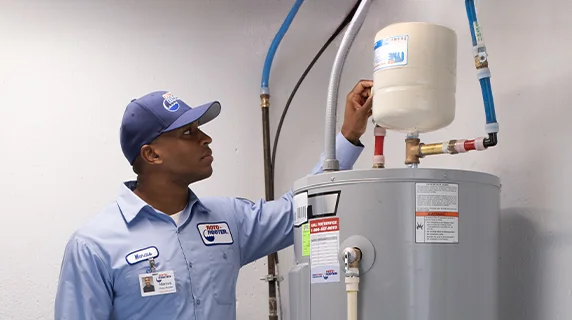

Planning Your Water Heater Replacement
We’ll assess your current heater and help you choose a replacement that fits your property.
- Sizing the New Unit
We’ll ask how much hot water you use at busy times. That helps us recommend a tank size or tankless flow rate that can keep up.
- Removing the Old Water Heater
We’ll review access to the unit and explain how we’ll disconnect and remove it. We’ll also flag any connection changes the new heater needs.
How Do You Know When It's Time to Replace Your Water Heater?
A water heater doesn't need to fail completely before you start thinking about replacement.
If your system is showing signs of age or you're regularly dealing with hot water problems, it's worth finding out whether keeping it makes sense.
Here are some of the most common reasons homeowners consider replacing a water heater.
Your Water Heater Is Getting Older
Many conventional tank water heaters have an expected service life of roughly a decade, although actual lifespan varies based on water quality, maintenance, installation conditions, and usage.
Age alone doesn't mean a water heater must be replaced. However, an older unit that is also experiencing performance problems may be a stronger candidate for replacement.
You're Running Out of Hot Water More Often
If hot water runs out before everyone finishes showering, or your household's needs have outgrown your existing system, your current water heater may no longer be providing enough capacity.
Sometimes the issue is a repairable component. In other cases, installing a correctly sized replacement may be the better solution.
The Water Heater Is Leaking
Water around your heater isn't something to ignore.
Some leaks come from fittings, valves, or connections that may be repairable. However, if the storage tank itself has developed a leak due to corrosion or deterioration, replacement is generally necessary.
Finding the source of the leak will help determine what needs to happen next.
Repairs Are Becoming More Frequent
If you've already had the same unit repaired several times and new problems keep appearing, you may be reaching the point where continued repairs are no longer practical.
Instead of addressing one failing component after another, it may make more sense to invest in a new water heater.
Your Hot Water Needs Have Changed
Maybe you've added another bathroom, your household has grown, or you want to switch to a different water heating system.
Replacement can be an opportunity to choose equipment that better matches how you use hot water today.
Not sure whether your water heater is ready to be replaced? Call Roto-Rooter to schedule an assessment and discuss your options.
Repair or Replace? Making the Right Decision
Replacing a water heater is an important decision, especially when your current unit is still producing some hot water.
You don't want to replace equipment unnecessarily. But you also don't want to keep dealing with breakdowns and uncertainty if your water heater is nearing the end of its useful life.
A few important factors can help guide the decision:
- Condition: Is the problem limited to a replaceable part, or is the tank itself deteriorating?
- Age: Is your water heater relatively new, or is it approaching the end of its expected service life?
- Repair history: Is this an isolated issue or part of a recurring pattern?
- Performance: Does the heater still meet your household's hot water requirements?
- Future reliability: Is a repair likely to address the underlying problem, or are more issues expected because of the unit's overall condition?
Roto-Rooter can inspect the system and explain whether repair or replacement is the more practical option based on its condition.
Explore Our Water Heater Services
Water Heater Repair
Find the cause of leaks, poor heating, or other problems with your water heater.
Water Heater Installation
Choose a water heater that fits your home and plan a professional installation.
Water Heater Maintenance
Plan routine inspections, flushing, and care for your tank or tankless water heater.
Water Heater Services
Compare water heater types and find the right service for your home or business.
Choosing the Right Replacement Water Heater
Replacing a water heater doesn't always mean installing the exact same model.
If your previous system struggled to keep up, took up too much space, or didn't meet your expectations, this is an opportunity to consider something different.
Replace Your Existing Tank Water Heater
If your current tank water heater has generally worked well for your household, replacing it with a comparable gas or electric model may be a straightforward option.
However, it's still worth reviewing the capacity and specifications to make sure the replacement meets your needs.
Upgrade to a Tankless Water Heater
A tankless water heater heats water on demand without relying on a storage tank.
This may be a good option if you're interested in reducing the space used by your water heater or exploring different efficiency and operating characteristics.
Tankless systems must be sized for the hot water flow your household needs. Converting from a tank system may also require modifications to existing utilities or venting.
Explore High-Efficiency Water Heating
Depending on your property and local service availability, you may also be able to consider hybrid heat pump or other high-efficiency water heaters.
These models have different space, energy, and installation requirements.
Our plumbing professionals can help you understand which available options are suitable for your property.
What Happens During a Water Heater Replacement?
If you've never replaced a water heater before, you might be wondering how much work is involved and what will happen to the old unit.
Here's how a typical replacement process works.
1. Evaluate your existing water heater.
We'll review your current system, the problems you're experiencing, and whether replacement is the appropriate next step.
2. Select a suitable replacement.
Your plumbing professional will discuss the water heater type, capacity, and installation requirements so you understand your options.
3. Prepare for the replacement.
The existing water heater must be safely shut down, isolated, and drained as appropriate. Any changes needed for the replacement installation can be identified.
4. Remove the old unit and install the new water heater.
The old system is disconnected and the replacement is positioned and installed with the necessary water, energy, and venting connections. Your plumber can also explain arrangements for removing and disposing of the old equipment.
5. Test the new water heater.
Once installed, the system is checked for proper operation and leaks. You'll receive information about its controls, operation, and recommended care.
If you're changing to a different type of water heater or moving the installation location, additional work may be necessary.
What Are the Benefits of Replacing an Older Water Heater?
When replacement is the right choice, a new water heater can offer several practical benefits.
- More dependable hot water: You can stop relying on a deteriorating unit that's been giving you recurring problems.
- Capacity better matched to your household: A properly sized replacement can help address hot water shortages caused by an undersized system.
- Improved energy performance: Depending on the model, a newer system may use energy more efficiently than an older unit.
- Fewer concerns about aging equipment: Replacing a worn-out tank removes the risks associated with continued deterioration of that unit.
- An opportunity to upgrade: You can explore different technologies and features instead of automatically replacing like for like.
The goal isn't simply to install something new. It's to choose a water heater that serves your home or business more effectively.
Why Choose Roto-Rooter for Water Heater Replacement?
When you're replacing an important piece of your home's plumbing system, you want the process to be clear and the installation handled properly.
Roto-Rooter can help with:
- Evaluating the existing system: Understanding the condition of your water heater before deciding on replacement.
- Choosing replacement equipment: Reviewing tank, tankless, gas, electric, and other suitable options.
- Professional installation: Replacing the system with attention to proper connections and installation requirements.
- Understanding your new water heater: Explaining system operation and recommended maintenance.
- Future service needs: Providing water heater repair and other plumbing services when needed.
From the initial assessment to getting the new system operating, we're here to help you move forward with confidence.
Ask your local Roto-Rooter about financing availability and terms. If you’re choosing a new water heater, check the ENERGY STAR Rebate Finder for offers on eligible models.
Choose a Replacement Water Heater That Fits Your Needs
If your water heater is wearing out or can’t keep up with demand, Roto-Rooter can review your setup and help you choose a replacement.
Frequently Asked Questions
How often should a water heater be replaced?
When to replace a water heater depends on its condition and performance, though many traditional tank models last around 10 years. Water quality, maintenance, usage, and the condition of the unit all play a role. Tankless systems may have a longer service life when properly maintained.
Should I replace my water heater if it's still working?
A water heater that's still working reliably may not need immediate replacement, even if it's older. However, if it's showing signs of corrosion, leaking, struggling to meet demand, or needing frequent repairs, having it evaluated can help you plan before it fails.
Can I replace my tank water heater with a tankless model?
You can often replace a tank water heater with a tankless model after a plumber checks the capacity you need and whether your gas, electrical, plumbing, or venting systems need changes.
How long will I be without hot water during replacement?
How long you'll be without hot water during water heater replacement depends on the work involved. A straightforward replacement is generally less involved than switching system types or modifying existing connections. Your plumber can explain what the work involves and what to expect during the appointment.
What happens to my old water heater?
Your old water heater needs to be disconnected, removed, and disposed of according to applicable requirements. Discuss removal and disposal arrangements with your local Roto-Rooter when scheduling your replacement.