Water Heater Repair Services
No hot water? Let’s find the problem and get it running again.
Cold showers, dishes piling up, and laundry that has to wait can throw off your day. Leaks or strange noises add to the worry.
Roto-Rooter helps homeowners and businesses diagnose water heater problems. Our plumbers inspect tank and tankless systems, explain your repair options, and help restore hot water.
Tell us when the problem started and whether it affects every hot water tap. If your unit displays an error code, have it handy for the visit.

Common Water Heater Problems by Type
See what to look for when your water heater leaks, makes noise, or stops heating reliably.

Gas Water Heaters
- Pilot light goes out
- Water pooling around the tank
- Leaking relief valve
- Gas control issues
- Rumbling or popping

Electric Water Heaters
- No hot water or weak heating
- Heating element or thermostat failure
- Rust-colored hot water
- Unusual odor from hot water
- Leaking tank fittings

Tankless Water Heater
- No hot water or reduced flow
- Ignition or flame failure
- Error codes or sensor issues
- Shuts off during heavy use
- Temperature fluctuations
Heat Pump Water Heaters
- Runs often without reaching temperature
- Excess water around the tank
- Compressor or fan noise
- Restricted airflow
- Control panel error codes
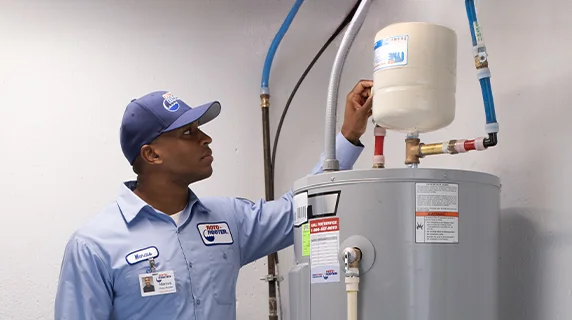

What to Expect From a Water Heater Repair Visit
We’ll find out what’s causing the problem and explain the next steps.
- Finding the Cause
We’ll ask what changed and inspect the unit. If there’s a leak, we’ll check whether it comes from a connection, a valve, or the tank itself.
- Reviewing Your Repair Options
Your plumber will explain what they found, which repairs are possible, and when the condition of the unit makes replacement worth considering.
Signs Your Water Heater Needs Repair
Water heaters don't always stop working without warning. Often, there are signs that something isn't functioning as it should.
You may need water heater repair if you're experiencing:
- No hot water: Your water heater isn't producing hot water, or the water never gets above lukewarm.
- Hot water running out too quickly: Your supply doesn't last as long as it used to, even though your household's water use hasn't changed.
- Inconsistent water temperatures: Your shower suddenly switches from hot to cold, or the temperature fluctuates while you're using the water.
- Leaks or moisture around the unit: You notice dripping connections, wet flooring, or water collecting near the base of the heater.
- Rumbling or popping noises: Unusual sounds may indicate sediment buildup inside a tank water heater or another issue that needs attention.
- Discolored hot water: Rust-colored water coming from hot taps may indicate corrosion or sediment somewhere in the hot water system.
- Recurring error codes: Your tankless water heater displays a warning or repeatedly shuts down.
Not every symptom means you need a new water heater. Some problems can be resolved by replacing a faulty component, correcting an issue with the system, or performing necessary maintenance.
The first step is finding out what's actually causing the problem.
What's Wrong With Your Water Heater?
Different water heaters can develop different problems. Understanding what may be happening helps you make an informed decision about repairs.
Gas Water Heater Problems
Gas water heaters rely on ignition components, gas controls, thermostats, and other parts to heat water. When one of these components isn't functioning properly, you may experience inconsistent temperatures, a pilot light that won't stay lit, or a complete loss of hot water.
A plumbing professional can assess the system and determine which components may need attention.
Propane Water Heater Problems
Propane water heaters rely on a steady fuel supply and a properly functioning ignition system to heat water. If your unit isn't producing hot water, shuts off unexpectedly, or struggles to maintain a consistent temperature, the problem could involve a low propane supply, a faulty regulator, an ignition failure, or an issue with the burner or gas controls.
Because propane water heaters have specific fuel supply and ventilation requirements, diagnosing and repairing these problems should be handled by a qualified professional. Roto-Rooter can help assess the issue and determine the appropriate next steps.
If you smell propane, leave the building immediately and contact your propane supplier or emergency services from a safe location.
Electric Water Heater Problems
An electric water heater may stop heating properly when a heating element, thermostat, or another component fails. A single failing element can sometimes leave you with less hot water than usual, while other faults may prevent the unit from heating altogether.
Proper diagnosis helps determine whether the issue can be repaired or requires attention from a qualified electrical professional.
Tankless Water Heater Problems
Tankless water heaters heat water as it's needed rather than storing it in a tank. Problems with ignition, sensors, water flow, or mineral buildup can interfere with their operation.
If your tankless unit is displaying error codes, shutting down, or struggling to maintain a consistent temperature, an inspection can help identify the cause.
Explore Our Water Heater Services
Water Heater Installation
Choose a water heater that fits your home and plan a professional installation.
Water Heater Replacement
Replace a failing water heater with a model that meets your hot water needs.
Water Heater Maintenance
Plan routine inspections, flushing, and care for your tank or tankless water heater.
Water Heater Services
Compare water heater types and find the right service for your home or business.
What to Expect During Your Water Heater Repair Appointment
You shouldn't have to guess what's wrong with your water heater or whether a recommended repair makes sense.
When you schedule water heater service with Roto-Rooter, the goal is to identify the problem and help you understand what needs to happen next.
1. We'll assess the problem.
Your plumbing professional will ask about the symptoms you've noticed, when they started, and whether the problem has occurred before.
2. We'll inspect the water heater.
Depending on your system and the symptoms, the inspection may include checking for leaks, evaluating heating components and controls, and looking for signs of sediment, corrosion, or other problems.
3. We'll explain your repair options.
Once the issue has been identified, we'll explain the findings, what work may be needed, and whether repairing the existing unit is a practical option.
4. We'll complete the approved repair and check the results.
When the repair can be performed, the plumber will address the identified issue and check the system's operation before completing the appointment.
If the water heater is no longer a good candidate for repair, we'll help you understand your replacement options instead.
Should You Repair or Replace Your Water Heater?
A malfunctioning water heater doesn't automatically need to be replaced.
Repair may make sense when the unit is in otherwise good condition and the problem involves a replaceable component, such as a thermostat, heating element, or valve.
Replacement may be worth considering when:
- The tank itself is leaking or showing significant corrosion.
- The water heater is approaching or has passed its expected service life.
- The unit has needed repeated repairs.
- Repairing the system won't resolve ongoing hot water capacity problems.
- The existing water heater no longer meets your household's needs.
A leaking connection may be repairable, but a tank that has corroded through generally requires replacement. That's why identifying the source of a leak is so important.
If you're unsure which option makes sense, Roto-Rooter can assess your system and discuss the next steps.
Why Choose Roto-Rooter for Water Heater Repair?
When your hot water stops working, you want someone who can identify the problem and give you a clear path forward.
Roto-Rooter offers:
- Service for multiple water heater types: Assistance with traditional gas and electric tank water heaters and tankless systems.
- Problem-focused diagnostics: An inspection that looks beyond the immediate symptom to identify the likely cause.
- Clear explanations: Information about the issue and your repair or replacement options.
- Complete water heater solutions: Help with repairs, installation, and replacement when your needs change.
- Residential and commercial plumbing experience: Water heater services for homes and businesses.
We're here to help you make the right decision for your water heater, whether that's repairing the unit you have or planning for a replacement.
Ask your local Roto-Rooter about financing availability and terms. If you’re choosing a new water heater, check the ENERGY STAR Rebate Finder for offers on eligible models.
Get Your Hot Water Back With Roto-Rooter
Whether your water heater has stopped heating or is showing signs of trouble, Roto-Rooter can find the cause and explain your repair options.
Frequently Asked Questions
Can a leaking water heater be repaired?
A leaking water heater can sometimes be repaired, but it depends on where the leak is coming from. Loose fittings, connections, or certain valves may be repairable. However, a leak caused by corrosion or a crack in the water heater's storage tank usually means the tank needs to be replaced. A plumber can inspect the unit to determine the source.
Why is my water heater running out of hot water so quickly?
A water heater may run out of hot water quickly because of a failing heating element, thermostat problems, sediment buildup, or a system that's undersized for your hot water demand. The cause depends on the type of water heater you have and how the problem presents itself.
Can Roto-Rooter repair tankless water heaters?
Roto-Rooter can repair tankless water heaters where the service is available. Depending on the model and issue, service may involve diagnosing ignition problems, checking system controls, addressing mineral buildup, or repairing faulty components. Contact your local Roto-Rooter to discuss your unit and service needs.
What should I do if my water heater is leaking?
If your water heater is leaking, turn off the water supply to the unit if it's safe to do so and keep away from electrical equipment in wet areas. Avoid attempting repairs to gas or electrical components. Contact a plumbing professional to inspect the leak. If you smell gas, leave the building and contact your gas utility or emergency services from a safe location.
How do I know if repairing my water heater is worthwhile?
Whether repairing your water heater is worthwhile depends on its age, overall condition, repair history, and the nature of the problem. A repairable component failure in an otherwise healthy unit is different from a badly corroded tank. Roto-Rooter can help you compare the options based on what the inspection reveals.