Water Heater Installation in Garland, TX
Hard Water, Clay Soil, and Aging Slab Homes Push Garland Water Heaters to Their Limits
Garland's water supply averages 161 milligrams per liter of hardness - roughly 7 to 10.5 grains per gallon - placing it in the hard to very hard category. That mineral content deposits calcium and magnesium scale inside tanks, on heating elements, and through tankless heat exchangers at a rate that noticeably reduces performance within a few years. White calcium carbonate particles breaking free from scaled water heater interiors commonly clog faucet aerators and showerheads across Garland homes.
The city sits on expansive North Texas clay soil that swells during wet periods and contracts during drought. That seasonal movement stresses plumbing connections throughout the home, including the supply lines, gas piping, and drain connections attached to water heaters. Garland has one of the oldest housing stocks in Dallas County, with thousands of homes built on concrete slab foundations between the 1960s and 1990s. Many of these properties still rely on original cast iron drain piping and undersized gas lines that were designed for lower-output water heaters.
Roto-Rooter has been a trusted plumbing company since 1935. Our Garland technicians understand how North Texas clay, hard water, and aging slab construction affect every aspect of a water heater installation.
Available 24/7, 365 days a year for emergency water heater replacement and installation.
Roto-Rooter technicians are fully trained and insured with the tools and equipment to handle any water heater installation.
Full assessment of existing plumbing, gas lines, and electrical capacity before every installation.
Call Roto-Rooter at 972-728-3810 or schedule service online to discuss water heater installation for your Garland home.
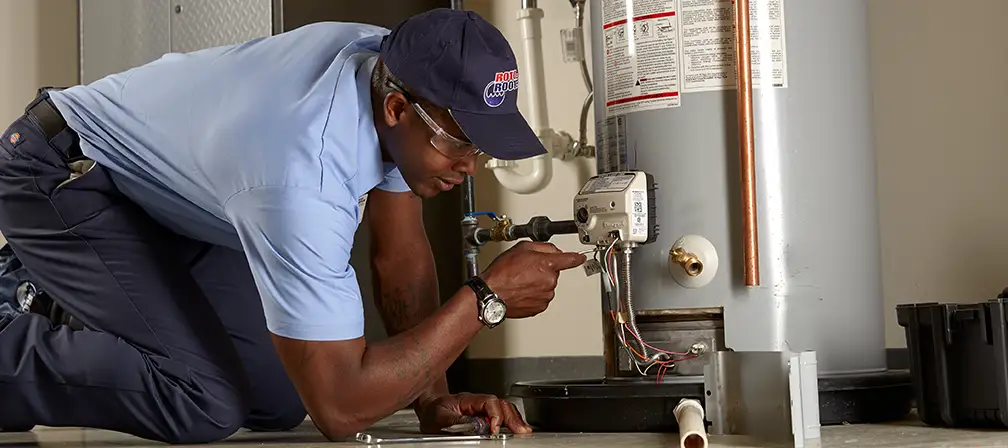
Tank and Tankless Equipment Built for North Texas Conditions
Garland's warm climate keeps incoming water temperatures in the 50s to 70s throughout the year, helping water heaters recover quickly. But the hard water factor dominates equipment selection - units installed without consideration for mineral buildup face shortened lifespans and rising energy costs as scale accumulates.
Roto-Rooter installs the following water heater types in Garland:
- Conventional tank water heaters (gas): Available in 40, 50, and 75-gallon capacities. Gas units deliver fast recovery times that keep pace with Garland's peak household demand. Models with reinforced glass-lined tanks resist scale adhesion longer in hard water conditions.
- Conventional tank water heaters (electric): A practical option for Garland homes on all-electric utility plans. Electric elements are individually replaceable when hard water scale affects performance - an advantage in areas where elements wear faster due to mineral deposits.
- Tankless water heaters (gas): On-demand heating eliminates standby energy loss. In Garland, tankless units need annual descaling to prevent mineral deposits from restricting heat exchanger flow. Gas tankless units require verified gas line capacity, which many older Garland homes lack without upgrades.
- Tankless water heaters (electric): Whole-house and point-of-use options that heat water as it flows. No venting required. Garland's warm incoming water temperatures help electric tankless units deliver strong flow rates with lower energy draw.
- High-efficiency condensing units: Extract additional heat from exhaust gases for efficiency ratings above 90%. PVC venting simplifies installation in Garland garages and utility closets where traditional metal flue routing is impractical.
- Hybrid heat pump water heaters: Pull heat from surrounding air and use roughly 60% less electricity than standard electric tanks. Garland's hot garage temperatures during summer months create ideal conditions for heat pump technology.
Signs Your Garland Water Heater Needs Replacement
- White particles clogging fixtures: Calcium carbonate scale breaking free from the water heater interior and collecting in faucet aerators and showerheads - a common indicator in Garland's hard water.
- Rusty or discolored hot water: Brown or rust-colored water from hot taps indicates interior tank corrosion. Once the tank lining fails, replacement is the only reliable fix.
- Rumbling or popping sounds: Hardened sediment on the tank bottom traps water underneath, creating steam pops when the burner fires. Garland's hard water accelerates sediment formation.
- Water pooling around the base: Any moisture near the water heater suggests a tank leak or failing connections. In Garland's garage installations, leaks can spread undetected beneath stored items.
- Inconsistent hot water temperature: Fluctuating temperatures signal a failing thermostat, scaled heating element, or a tank that can no longer meet demand.
- Age beyond 8 to 10 years: Tank water heaters in Garland's hard water conditions often reach end of life earlier than units in softer water areas. Proactive replacement prevents emergency failures and potential water damage.
- Rising energy bills: A gradual increase in gas or electric costs without changes in usage points to a water heater losing efficiency to scale buildup.
Frequently Asked Questions
Should I choose a tank or tankless water heater in Garland?
Both types work well in Garland's warm climate when maintained for hard water conditions. Tank units offer lower upfront costs and straightforward installation, especially in older homes. Tankless units eliminate standby energy loss and last 15 to 20 years with proper descaling, but many older Garland homes need gas line upgrades to support them. Roto-Rooter technicians assess your gas line capacity and help you choose the right option.
How often should I maintain my water heater in Garland?
Annual maintenance is essential in Garland's hard water conditions. Tank units need yearly flushing to remove mineral sediment, plus an anode rod inspection every two years. Tankless units require annual descaling. Call 972-728-3810 to schedule maintenance for your Garland water heater.
Can my older Garland home support a tankless water heater?
Most older Garland homes can support tankless units with proper gas line and electrical upgrades. Homes built in the 1960s through 1980s commonly have 1/2-inch gas supply lines that need upsizing to 3/4-inch or larger to deliver the BTU input a tankless unit demands. Roto-Rooter evaluates your existing infrastructure and provides a complete scope of work before installation begins.
How long does a water heater installation take in Garland?
A standard tank replacement typically takes two to four hours. Tankless installations require four to eight hours when converting a tank setup, due to gas line upgrades, new venting runs, and potential electrical work. Older Garland homes from the 1960s and 1970s may need additional time for gas line and supply connection upgrades.
Does Garland's clay soil affect my water heater?
Indirectly, yes. Garland sits on expansive clay that swells and contracts with moisture changes. That soil movement can stress water supply lines and gas connections throughout the home, including those attached to the water heater. Roto-Rooter technicians inspect all connections during installation and use flexible connectors where appropriate to accommodate minor soil-related movement.
Do I need a permit for water heater installation in Garland?
Garland's building department requires permits for water heater installations involving changes to gas piping, electrical circuits, or venting systems. Roto-Rooter handles all permit applications and coordinates required inspections as part of the installation process.
How does Garland's hard water affect my water heater?
Garland's water averages 7 to 10.5 grains per gallon hardness. Calcium and magnesium minerals deposit as scale on tank walls, heating elements, and inside tankless heat exchangers. Without regular flushing, this scale reduces heating efficiency and can shorten a water heater's lifespan by several years. White particles clogging faucet aerators are often bits of calcium carbonate scale from the water heater interior. Annual flushing for tank units and descaling for tankless units helps maintain performance.
Serving the entire Dallas metro area, Including:
Counties in the Garland Area
Where Garland's Neighborhoods Stand on Plumbing Readiness
Garland's residential development spans roughly six decades. Each construction era brought different plumbing standards, pipe materials, and gas line sizing that directly affect water heater installation complexity.
Homes in central and south Garland built during the 1960s and 1970s sit on concrete slab foundations with original cast iron drain piping running beneath the slab. Gas lines in these homes were sized for lower-BTU water heaters common at the time. Upgrading to a modern high-efficiency or tankless unit often requires running new gas supply piping between the meter and the installation location. Many of these properties still have 20-plus-year-old water heaters that have operated well past their expected life in hard water conditions.
The Firewheel area and surrounding neighborhoods developed in the late 1990s and early 2000s feature homes with copper and PEX plumbing, properly sized gas lines, and modern electrical panels. These newer homes accommodate tankless and high-efficiency installations with fewer modifications, though Garland's hard water still demands the same scale management attention.
Roto-Rooter technicians evaluate these neighborhood-specific conditions before recommending a water heater configuration for your Garland home.

Same-Day Water Heater Installation in Garland
Call Roto-Rooter for Water Heater Installation in Garland

SPECIAL FINANCING AVAILABLE
We have partnered with Synchrony Bank to offer financing options to make your plumbing repair expenses as convenient and stress-free as possible.