Get the Roto-Rooter App

Easy scheduling and exclusive coupons

Download
Skip to main content

Your Local Roto-Rooter Plumber in

Garland, TX

972-728-3810

Open 24/7,
7 Days a Week

Sewer Line Repair in Garland, TX

Clay Soil, Shifting Slabs, and the Pipes Caught in Between

Garland sits on North Texas expansive clay - a reactive soil that swells with moisture during spring storms and contracts into deep cracks during the dry summer months. Thousands of homes built between the 1960s and 1990s rest on slab foundations over this volatile ground, and the sewer lines running beneath those slabs absorb every shift. Cast iron drain lines under older slabs develop cracks as the soil pushes upward during wet periods and pulls away during drought. Joint connections separate, creating low spots where waste collects and roots find entry points.

Garland's municipal code enforcement is stricter than most nearby cities when it comes to sewer work, requiring permits and inspections for drain replacements, excavation, and tunneling access. Roto-Rooter has provided professional sewer line repair since 1935. Our experienced plumbing technicians navigate both the underground conditions and the local permitting requirements that come with sewer work here.

Call 972-728-3810 or schedule service online.
Schedule Online
badge-dollar-solid Save money! Check out available coupons
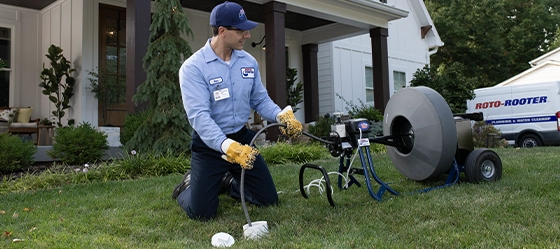
Roto-Rooter technician in front yard repairing sewer

Why Garland Sewer Lines Break Down

The combination of reactive clay soil, aging pipe materials, and mature residential landscaping creates specific failure patterns across Garland neighborhoods.

  • Expansive clay soil movement: Garland's clay soil can shift several inches seasonally. During wet springs, the soil swells and lifts pipe sections upward. During hot, dry summers, the clay contracts and leaves voids beneath pipes, causing them to sag and create bellied sections where waste accumulates.
  • Cast iron corrosion under slabs: Homes built in the 1960s through 1980s typically have cast iron sewer lines running beneath the slab foundation. After 40 to 60 years, these pipes corrode from the inside out, developing thin spots that crack under soil pressure and allow sewage to saturate the soil beneath the foundation.
  • Tree root penetration: Live oaks, pecans, and crepe myrtles planted across Garland's established neighborhoods send aggressive root systems toward moisture in damaged pipe joints. Roots enter through hairline cracks and joint gaps, then expand to fill the pipe interior.
  • Slab leak and sewer line interaction: When a sewer line leaks beneath a slab foundation, the escaping wastewater erodes supporting soil, causing the slab to settle unevenly. This settlement creates additional stress on the pipe, accelerating the damage in a cycle that worsens without repair.
  • Seasonal temperature stress: North Texas temperature swings between freezing winter nights and triple-digit summer heat cause pipe materials to expand and contract repeatedly, weakening rigid cast iron and clay connections over decades.

Frequently Asked Questions

How do I know if my sewer line is broken under my slab?

Signs include persistent sewer odors inside the home, damp or warm spots on the floor, cracks appearing in the slab or interior walls, and recurring drain backups that clearing does not permanently resolve. A camera inspection through the cleanout identifies the exact location and nature of under-slab damage. Call ${phone} to schedule an inspection.

Does Garland's clay soil make sewer line problems worse?

Yes. Garland's expansive clay soil is one of the primary drivers of sewer line failure in the area. The soil swells with moisture and shrinks during drought, creating constant movement that shifts, cracks, and misaligns buried pipes. Homes on slab foundations are particularly affected because the sewer lines run directly beneath the slab through this reactive soil layer.

Can you repair my sewer line without digging up my yard?

Trenchless methods including pipe lining and pipe bursting repair most sewer line damage without conventional excavation. For under-slab repairs, tunneling accesses the pipe without cutting through the foundation. A camera inspection confirms which method suits your specific pipe condition and layout.

How long does a sewer line repair take in Garland?

Trenchless lining and spot repairs typically complete in one day. Tunneling repairs for under-slab lines may take one to two days. Full line replacements with excavation require two to three days depending on depth and soil conditions. Our technicians provide a specific timeline after the camera inspection.

What sewer pipe materials are common in Garland homes?

Homes built in the 1950s and 1960s typically have clay tile sewer lines. Construction from the 1960s through 1980s primarily used cast iron under slab foundations. Homes built after the late 1980s and into the 1990s transitioned to PVC and ABS plastic pipe. Each material has different failure modes and repair requirements.

Will a sewer line leak cause foundation damage?

A leaking sewer line beneath a slab foundation saturates the surrounding clay soil, causing it to expand unevenly. This uneven expansion pushes sections of the slab upward while eroded areas allow sections to settle. The result is foundation movement, interior cracks, and door frames that no longer align. Prompt repair prevents progressive foundation damage.

Does Roto-Rooter handle commercial sewer line repair in Garland?

Roto-Rooter provides commercial sewer line inspection and repair for restaurants, retail centers, office buildings, and industrial facilities throughout Garland. We coordinate with Garland's permitting office and utility departments to meet local code requirements for commercial sewer work.

Serving the entire Dallas metro area, Including:

Counties in the Garland Area

Denton, Collin, Ellis, Dallas, Rockwall, Kaufman, Tarrant, Parker, Johnson, Hood, Wise
Roto-Rooter Plumbing & Water Cleanup is proud to provide expert Plumbing, drain cleaning and water cleanup services to the Garland area.
Manager:Ryan Throne
Location:1225 Belt Line Road, Ste 103A
Garland, TX 75040
Phone Number:972-728-3810

Garland Neighborhoods and Sewer Line Conditions

Garland's development spans several decades, and each construction era left different pipe materials and installation methods underground.

  • Downtown Garland and older residential areas: Homes built in the 1950s and 1960s near the historic downtown core have some of the oldest sewer connections in the city. Clay tile and early cast iron laterals in this area have exceeded their expected service life, and mature trees along residential streets compound root intrusion problems.
  • Firewheel and Eastern Garland: Development from the 1970s and 1980s with cast iron under-slab sewer lines that are reaching the corrosion failure point. The rolling terrain in eastern portions of Garland adds soil movement pressure on buried pipe joints.
  • Duck Creek and Spring Creek corridors: Properties near creek corridors sit on alluvial soil with higher moisture content that fluctuates with creek levels. Sewer lines in these areas experience more aggressive soil movement and root intrusion than those on higher ground.
  • Northern Garland and Naaman Forest area: Later construction from the 1980s and 1990s with a mix of cast iron and early PVC sewer connections. While newer than the city's core, these homes are now 30 to 40 years old, and the clay soil has had decades to stress pipe joints.
  • Southwestern Garland near Richardson border: Post-war homes with aging infrastructure and proximity to the DART rail corridor. Construction vibration and heavy vehicle traffic add stress to already compromised sewer laterals.

Same-Day Sewer Line Repair in Garland

Our technicians begin every job with a camera inspection to see the interior condition of your sewer line and identify the exact location, cause, and extent of damage before recommending a repair approach.

  • Video camera inspection: A fiber-optic camera with distance tracking travels through the sewer line, recording pipe material condition, root intrusion points, bellied sections, cracks, and joint separations. This footage determines the right repair method.
  • Trenchless pipe lining (CIPP): A resin-coated liner is inserted through the existing pipe and cured in place, creating a seamless interior surface that seals cracks, bridges joint gaps, and blocks root entry points without excavation.
  • Pipe bursting: For severely deteriorated lines, a bursting head fractures the old pipe outward while pulling new HDPE pipe through the same path. This replaces the full line without trenching across the yard.
  • Tunneling repair: When sewer lines run beneath slab foundations, technicians tunnel under the slab to access the damaged pipe section without cutting through the foundation surface. This method preserves flooring and structural integrity.
  • Spot repair: Isolated damage - a single crack, one separated joint, or a short collapsed section - can be repaired by excavating and replacing only the affected portion.
  • Hydro jetting and root cutting: High-pressure water and mechanical root cutting clear obstructions and root masses that have entered through pipe damage, restoring flow capacity.

Garland's Trusted Sewer Line Repair Team

Roto-Rooter has been the trusted name in plumbing and sewer service since 1935. Our Garland technicians respond promptly with fully equipped service vehicles, ready to diagnose and repair any sewer line problem. We serve residential and commercial properties across Garland, including Downtown, Firewheel, Duck Creek, Naaman Forest, and all surrounding areas.

Call 972-728-3810 or schedule service online. Available 24/7, 365 days a year.

SPECIAL FINANCING AVAILABLE

We have partnered with Synchrony Bank to offer financing options to make your plumbing repair expenses as convenient and stress-free as possible.