Water Heater Installation in Oakland, CA
Earthquake Country and Century-Old Pipes Shape Oakland Water Heater Needs
Oakland sits directly on the Hayward Fault, one of the most active seismic zones in the United States. California building code requires all water heaters to be strapped to resist earthquake forces - a requirement that applies to both new installations and replacements. Beyond strapping, seismic activity can stress gas connections and water supply lines, making proper flexible connectors and shut-off valve placement critical components of every installation.
Oakland's water supply comes through the East Bay Municipal Utility District (EBMUD), sourced primarily at the Mokelumne River watershed in the Sierra Nevada. EBMUD reports water hardness between 1 and 7 grains per gallon - relatively soft compared to other California cities. While soft water is gentler on water heaters, Oakland's older homes present a different challenge: pipes that have carried water for 80 to 120 years, with mineral deposits, corrosion, and joint deterioration that complicate new equipment connections.
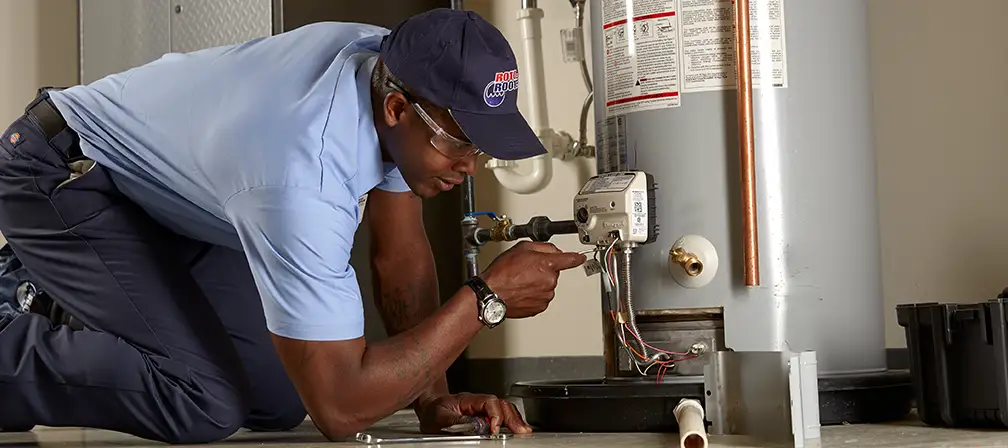
Roto-Rooter has been a trusted plumbing company since 1935. Our Oakland technicians handle installations in 1880s Victorians, postwar bungalows, and modern Lake Merritt condominiums alike, with seismic compliance built into every job.
Available 24/7, 365 days a year for emergency water heater replacement and installation.
Roto-Rooter is fully insured with experienced plumbing technicians.
Free estimates provided before any installation work begins. No extra charge for nights and weekends.
Full assessment of existing plumbing, gas lines, and seismic strapping before installation.
Call Roto-Rooter at 510-488-9295 or schedule service online to discuss water heater installation for your Oakland home.
Water Heater Types for the East Bay Climate
Oakland's mild year-round temperatures create favorable conditions for most water heater types. Incoming water temperatures rarely drop below the mid-50s, meaning units recover faster and maintain output more efficiently than in colder regions. That moderate climate also makes Oakland an excellent market for heat pump water heaters, which thrive in ambient temperatures above 40 degrees.
Roto-Rooter installs the following water heater types in Oakland:
- Conventional tank water heaters (gas): Available in 40, 50, and 75-gallon capacities. Gas units provide fast recovery times. Oakland's relatively soft EBMUD water means tank interiors experience less scale buildup than homes in harder-water California cities.
- Conventional tank water heaters (electric): Well-suited for Oakland homes without natural gas service or where venting is restricted. No combustion components to maintain, and the mild climate keeps incoming water temperatures manageable for electric heating elements.
- Tankless water heaters (gas): On-demand heating eliminates standby energy loss. Oakland's moderate incoming water temperatures allow tankless units to deliver strong flow rates across multiple fixtures simultaneously.
- Tankless water heaters (electric): Whole-house and point-of-use options that heat water as it flows. No venting required, making them a practical choice for Oakland's tightly built older homes where adding a new vent run is difficult.
- High-efficiency condensing units: Extract additional heat from exhaust gases for efficiency ratings above 90%. PVC venting simplifies installation and avoids the need for metal flue connections through Oakland's older roof structures.
- Hybrid heat pump water heaters: Pull heat from surrounding air and use roughly 60% less electricity than standard electric tanks. Oakland's mild garage and basement temperatures keep these units operating at peak efficiency year-round - an ideal match for the East Bay climate.
Oakland's Historic Neighborhoods and Installation Considerations
Oakland's housing stock reflects more than 140 years of development, and the plumbing behind the walls of a Rockridge Craftsman looks nothing like the systems inside a Jack London Square loft.
Rockridge homes, built primarily between 1906 and the 1920s after the great earthquake drove residents east across the bay, feature Craftsman bungalows with original galvanized steel supply lines and cast iron drain stacks. Installing a new water heater in these homes often involves upgrading corroded supply connections and verifying that aging gas piping can safely support modern equipment.
Temescal, one of Oakland's oldest neighborhoods, has a similar housing stock with early 20th-century bungalows and Victorians. Many properties are 100-plus years old with plumbing systems that have been patched and modified over multiple ownership changes.
Fruitvale's housing stock includes older bungalows and duplexes where deferred maintenance on plumbing systems is common. Water heater installations in this neighborhood frequently require updating shut-off valves, supply lines, and gas connections that have not been replaced in decades.
Roto-Rooter technicians evaluate these neighborhood-specific conditions before recommending a water heater configuration for your Oakland home.
Frequently Asked Questions
How does Oakland's water quality affect my water heater?
Oakland receives water from EBMUD with hardness levels between 1 and 7 grains per gallon - relatively soft. This means less mineral scale accumulation compared to harder-water cities, which generally extends water heater lifespan. Annual flushing is still recommended to clear any sediment that settles in the tank over time.
Should I choose a tank or tankless water heater for my Oakland home?
Both types perform well in Oakland's mild climate. Tank units offer lower upfront costs and simpler installation, especially in homes with existing tank setups. Tankless units save energy by heating water on demand and fit well in Oakland's smaller homes where space is limited. Roto-Rooter provides free estimates for both options.
How long does a water heater installation take in Oakland?
A standard tank replacement typically takes two to four hours, including seismic strapping. Tankless installations require four to eight hours when converting a tank setup, due to gas line upgrades, new venting runs, and potential electrical work. Older Oakland homes may require additional time to bring connections up to current code.
Can my older Oakland home support a tankless water heater?
Most older Oakland homes can support tankless units with proper modifications. Homes in Rockridge and Temescal often need gas supply pipe upgrades to deliver the BTU input a tankless unit requires. Electrical panel capacity must also be verified for electric tankless models. Roto-Rooter evaluates your existing infrastructure and provides a complete scope of work.
Does Oakland require earthquake strapping for water heaters?
Yes. California law requires all water heaters to be secured with approved seismic straps to prevent tipping during an earthquake. Oakland sits on the Hayward Fault, making proper strapping especially important. Roto-Rooter includes compliant earthquake strapping with every water heater installation in Oakland.
Do I need a permit for water heater installation in Oakland?
Oakland's building department requires permits for water heater installations involving gas line modifications, electrical circuit changes, or new venting systems. Roto-Rooter handles all permit applications and coordinates required inspections as part of the installation.
How often should I maintain my water heater in Oakland?
Annual maintenance extends the life of your water heater. Tank units need yearly flushing and an anode rod inspection every two to three years. Tankless units benefit from periodic descaling, though Oakland's softer water means less frequent service compared to harder-water areas. Call 510-488-9295 to schedule maintenance.
Serving the entire Oakland metro area, Including:
Counties in the Oakland Metro Area
Warning Signs Your Oakland Water Heater Needs Replacement
- Rusty or discolored hot water: Brown or rust-colored water from hot taps indicates interior tank corrosion. Once the tank lining fails, replacement is the only reliable fix.
- Unusual noises during heating cycles: Popping, rumbling, or cracking sounds result from sediment buildup on heating elements. While Oakland's soft water produces less scale than other cities, sediment still accumulates over years of use.
- Water pooling around the base: Any moisture near the water heater suggests a tank leak or failing connections. In Oakland's older homes, a leaking water heater can cause structural damage to aging floor joists and foundation elements.
- Inconsistent hot water temperature: Fluctuating temperatures signal a failing thermostat, damaged heating element, or a tank that can no longer meet demand.
- Age beyond 10 to 12 years: Tank water heaters typically last 10 to 15 years in Oakland's softer water conditions. Units past that range operate with declining efficiency and increasing failure risk.
- Rising energy bills: A gradual increase in gas or electric costs without changes in usage points to a water heater losing efficiency.

Same-Day Water Heater Installation in Oakland
Call Roto-Rooter for Water Heater Installation in Oakland

SPECIAL FINANCING AVAILABLE
We have partnered with Synchrony Bank to offer financing options to make your plumbing repair expenses as convenient and stress-free as possible.