Sewer Line Repair in Grand Prairie, TX
Shifting Clay, Seasonal Floods, and the Toll on Buried Pipes
Grand Prairie sits between Dallas and Fort Worth on some of the most reactive clay soil in North Texas. The Blackland Prairie formation beneath the city's residential neighborhoods absorbs moisture during spring rains and swells with enough force to lift pipe sections and shift slab foundations. When summer drought arrives, the clay contracts into deep cracks, leaving voids beneath sewer lines that cause them to sag and belly. Properties near Joe Pool Lake and the Mountain Creek drainage corridor face additional stress from seasonal water table fluctuations that compound the effects of clay movement on buried pipes.
Much of Grand Prairie's residential development dates to the 1960s through 1980s, placing cast iron sewer lines beneath slab foundations that have now absorbed three to five decades of this soil cycling. Roto-Rooter has provided professional sewer line repair since 1935. Our experienced plumbing technicians understand the soil conditions, pipe materials, and drainage patterns found beneath properties across the city.
Call 972-876-3974 or schedule service online.
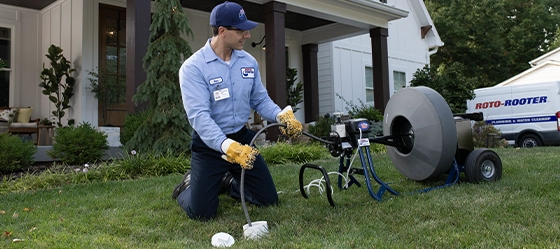
Why Grand Prairie Sewer Lines Deteriorate
The combination of reactive clay soil, flood-prone terrain, and aging pipe infrastructure creates specific failure patterns across the city.
- Expansive clay soil movement: Grand Prairie's clay shifts several inches seasonally. Wet periods swell the soil upward against pipe walls and foundations, while drought contracts the clay and removes support beneath buried lines. After decades of this cycling, pipe joints separate and rigid materials crack.
- Cast iron corrosion under slabs: Homes built in the 1960s through 1980s have cast iron sewer pipes running beneath slab foundations. After 40 to 60 years, internal corrosion thins these pipes while external soil moisture weakens them simultaneously. The clay soil keeps pipes damp year-round, accelerating deterioration.
- Seasonal flooding: Neighborhoods near the Mountain Creek corridor, Dalworth Park, and Indian Hills experience heavy seasonal flooding that saturates the ground around sewer connections. Floodwater forces entry through cracked pipe joints and erodes supporting soil beneath the pipe.
- Tree root penetration: Live oaks, pecans, and cedar elms across Grand Prairie's established neighborhoods send root systems toward the moisture in damaged pipe joints. The dense clay soil channels roots directly toward pipe leaks as one of the few underground moisture sources.
- Foundation-pipe interaction: A leaking sewer line saturates surrounding clay and causes uneven foundation heaving, which further stresses the pipe beneath the slab. A shifting foundation can bend or crush the sewer line, creating a worsening cycle.
Serving Grand Prairie and surrounding communities, Including:
Counties in the Grand Prairie Area
Grand Prairie Neighborhoods and Underground Conditions
Grand Prairie's residential areas span several construction decades, each leaving different pipe materials and conditions underground.
- Dalworth Park and Indian Hills: Established neighborhoods that experience frequent issues with root infiltration, compounded by heavy seasonal flooding. Older cast iron and clay tile sewer laterals in these areas have absorbed decades of clay movement and moisture cycling.
- Central Grand Prairie: Mid-century homes built in the 1960s and 1970s with cast iron under-slab sewer lines reaching the corrosion failure point. The older tree canopy along residential streets drives persistent root intrusion into weakened pipe joints.
- South Grand Prairie: Development spanning the 1970s through 1990s with a mix of cast iron and early PVC sewer connections. Proximity to Joe Pool Lake creates higher groundwater levels that increase infiltration pressure on damaged pipe joints.
- North Grand Prairie and Carrier Parkway area: Later development with newer pipe materials but the same reactive Blackland Prairie clay that stresses connections across the city. Commercial and residential properties share infrastructure corridors.
- Mountain Creek corridor: Properties along the Mountain Creek drainage face the most aggressive moisture cycling as creek levels rise and fall with seasonal rainfall. Sewer lines near the corridor experience elevated soil movement and flood-related damage.

Same-Day Sewer Line Repair in Grand Prairie
Grand Prairie's Trusted Sewer Line Repair Team

SPECIAL FINANCING AVAILABLE
We have partnered with Synchrony Bank to offer financing options to make your plumbing repair expenses as convenient and stress-free as possible.