Sewer Line Repair in Fremont, CA
Bay Mud, Seismic Zones, and the Lines That Run Beneath Fremont
Fremont occupies the eastern shore of San Francisco Bay, where the ground beneath residential neighborhoods ranges from stable alluvial fans near the foothills to young marine clay deposits closer to the shoreline. The Bay-facing portions of the city sit on soil classified as high liquefaction risk during seismic events - ground that can behave like liquid when shaken, shifting buried pipes and severing connections in seconds. Even without a major earthquake, the moisture-rich Bay mud expands and contracts seasonally, creating slow ground movement that stresses pipe joints over decades.
Many Fremont homes were built during the city's suburban expansion in the 1960s and 1970s, placing cast iron and clay tile sewer laterals beneath properties that are now 50 to 60 years old. Tree root intrusion, corrosion, settling soil, and seismic micro-movements have taken a cumulative toll on these aging connections. Roto-Rooter has provided professional sewer line repair since 1935. Our experienced plumbing technicians understand the specific soil zones, pipe materials, and seismic considerations that affect sewer lines beneath properties here.
Call 510-493-9058 or schedule service online.
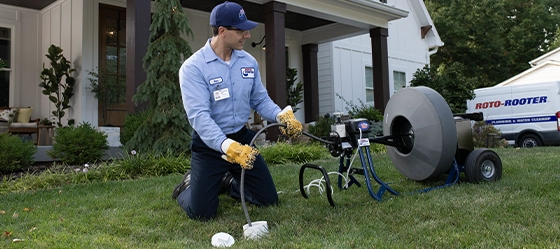
What Causes Sewer Line Failure Here
The Bay Area's geologic complexity creates sewer line failure patterns that differ across neighborhoods depending on soil type, proximity to the Bay, and construction era.
- Soil settlement and movement: The young marine clay deposits along the Bay shoreline compress under the weight of development and shift with seasonal moisture changes. Sewer lines running through this soil develop bellied sections and joint separation as the ground settles unevenly over decades.
- Seismic stress: The Hayward Fault runs directly through the East Bay. Even minor seismic activity shifts ground around buried pipes, and a significant event can displace entire pipe sections. Properties near the fault trace face elevated risk of seismically induced sewer line damage.
- Clay tile and cast iron deterioration: Homes built in the 1960s and 1970s typically have clay tile or cast iron sewer laterals. After 50 to 60 years, clay joints fail and cast iron corrodes through, particularly in the moisture-rich soil near the Bay.
- Tree root invasion: Valley oaks, coast live oaks, and ornamental trees planted throughout established neighborhoods send root systems toward moisture in damaged pipe joints. Older developments with mature tree canopies experience the most aggressive root intrusion.
- Corrosion acceleration in Bay-area soil: The high mineral content and moisture in soils near the Bay accelerate external pipe corrosion. Cast iron pipes in near-Bay neighborhoods corrode faster than identical pipes installed in drier foothill areas.
Serving Fremont and surrounding communities, Including:
Counties in the Fremont Area
Local Neighborhoods and Sewer Line Conditions
Development across the area spans several decades, and soil conditions vary significantly between foothill and flatland neighborhoods.
- Centerville and central residential area: One of the oldest developed sections with homes dating to the 1950s and 1960s. Original clay tile and cast iron sewer laterals have absorbed decades of soil settlement and root intrusion. Mature valley oaks along residential streets drive persistent root pressure into aging pipe joints.
- Niles and Niles Canyon area: Historic neighborhoods near Alameda Creek with alluvial soil and proximity to seasonal creek flow. Higher moisture variability stresses pipe connections, and the older housing stock has some of the most deteriorated sewer laterals in the area.
- Mission San Jose and foothill areas: Properties on higher ground with more stable soil conditions than flatland neighborhoods. However, the slope creates gravitational stress on sewer laterals running downhill, and seismic proximity to the Hayward Fault adds ground movement risk.
- Warm Springs and Irvington: Mixed-era development with both older cast iron connections and newer PVC installations. The transition between Bay mud and alluvial fan soil creates varying ground conditions across short distances.
- Bay-facing neighborhoods and Ardenwood: Properties closest to the Bay sit on the highest-risk liquefaction soils. Sewer lines in these areas face the most aggressive soil movement and moisture-related corrosion.

Same-Day Sewer Line Repair in Fremont
Your Trusted Sewer Line Repair Team

SPECIAL FINANCING AVAILABLE
We have partnered with Synchrony Bank to offer financing options to make your plumbing repair expenses as convenient and stress-free as possible.