Water Heater Installation in Detroit, MI
Why Detroit's Historic Pipes and Cold Winters Demand the Right Water Heater
Detroit's housing stock spans more than a century of construction. Corktown rowhouses date to the 1830s, while Midtown features modern infill development. That variety of pipe materials - galvanized steel, cast iron, copper, and PEX - means every water heater installation requires careful evaluation of the existing plumbing before connecting a new unit. An improperly matched water heater strains aging connections and leads to premature failures.
Winter groundwater temperatures in Detroit drop into the mid-30s, forcing water heaters to work harder and longer to reach set temperatures. Detroit's Great Lakes water supply measures around 6 grains per gallon hardness - moderately hard. That mineral content builds calcium and magnesium deposits inside tanks and on heating elements over time, reducing efficiency by up to 30% when maintenance is neglected. Sediment accumulation also creates hot spots on tank walls that accelerate corrosion.
Roto-Rooter has been a trusted plumbing company since 1935. Our technicians understand the specific challenges Detroit's climate and aging infrastructure present for water heater installations across the city.
Available 24/7, 365 days a year for emergency water heater replacement and installation.
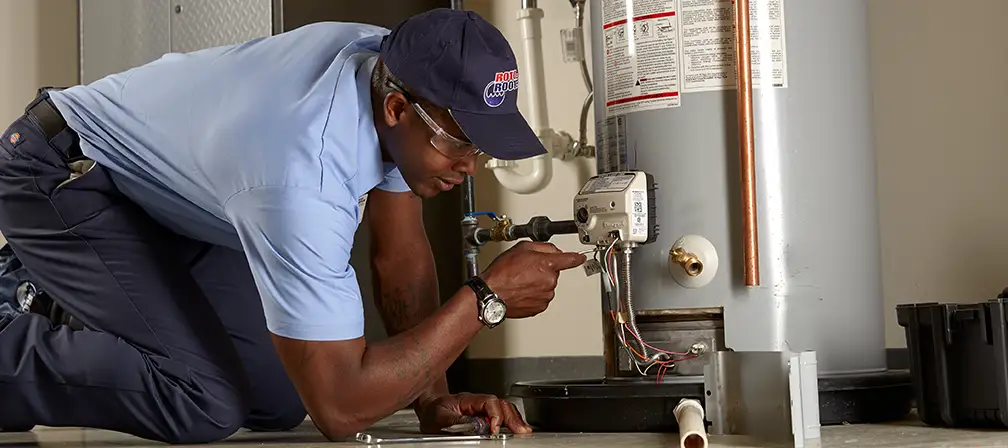
Roto-Rooter technicians are fully trained and insured with the tools and equipment to handle any water heater installation.
Full assessment of existing plumbing, gas lines, and electrical capacity before every installation.
Call Roto-Rooter at 313-223-1212 or schedule service online to discuss water heater installation for your Detroit home.
Tank and Tankless Options Built for Michigan Winters
Cold incoming water temperatures in Detroit mean your water heater recovers slower than units in warmer climates. Selecting the right type and size prevents the frustration of running out of hot water during peak morning and evening use.
Roto-Rooter installs the following water heater types in Detroit:
- Conventional tank water heaters (gas): Available in 40, 50, and 75-gallon capacities. Gas units deliver fast recovery times that keep pace with Detroit's cold incoming water. Reliable and cost-effective for households with steady hot water demand.
- Conventional tank water heaters (electric): A practical choice for Detroit homes without natural gas service or where venting is difficult. No combustion components to maintain, and installation is straightforward in most configurations.
- Tankless water heaters (gas): On-demand heating eliminates standby energy loss from keeping a full tank hot around the clock. High-output models maintain rated flow even when Detroit's incoming water arrives in the mid-30s during January and February.
- Tankless water heaters (electric): Whole-house and point-of-use options that heat water as it flows. No venting required, but the electrical panel must support the amperage draw - a consideration in older Detroit homes with 100-amp panels.
- High-efficiency condensing units: Extract additional heat from exhaust gases for efficiency ratings above 90%. PVC venting simplifies installation in Detroit basements where existing metal flue configurations need updating.
- Hybrid heat pump water heaters: Pull heat from surrounding air and use roughly 60% less electricity than conventional electric tanks. Perform best in basement installations where ambient temperatures stay above 40 degrees year-round.
Signs Your Detroit Water Heater Needs Replacement
- Rusty or discolored hot water: Brown or rust-colored water from hot taps indicates interior tank corrosion. Once the tank lining fails, replacement is the only reliable fix.
- Unusual noises during heating cycles: Popping, rumbling, or cracking sounds result from sediment buildup on heating elements. Detroit's moderately hard water accelerates this process, and heavily scaled tanks rarely recover full efficiency.
- Water pooling around the base: Any moisture around the water heater suggests a tank leak or failing connections. Even small leaks can cause significant damage to basement flooring and walls.
- Inconsistent hot water temperature: Fluctuating temperatures signal a failing thermostat, damaged heating element, or a tank that can no longer meet demand.
- Age beyond 10 years: Tank water heaters in Detroit typically last 8 to 12 years. Units past that range operate with declining efficiency and increasing failure risk.
- Rising energy bills: A gradual increase in gas or electric costs without changes in usage points to a water heater working harder to overcome scale buildup and wear.
Operated as an Independent Contractor - All available services, hours of operations, pricing structure, and guarantees may vary by location
Serving the entire Detroit metro area, Including:
Counties in the Detroit Metro Area
Neighborhood Plumbing Across Detroit's Diverse Housing Stock
Detroit's neighborhoods reflect distinct construction eras, and the plumbing behind the walls varies accordingly. A water heater that connects smoothly in a 2010 Midtown condo may need significant adaptation work in an 1890s Indian Village home.
Homes in Corktown - Detroit's oldest surviving neighborhood, settled in the 1830s - feature Federal-style rowhouses with original gas piping and galvanized steel water lines that require thorough inspection before supporting a new water heater. Indian Village and Boston-Edison showcase grand homes built between 1895 and 1925, often with oversized cast iron drain stacks and copper supply lines that have carried moderately hard water for a century.
Palmer Woods, developed in the 1920s, contains Tudor and Colonial Revival homes with plumbing systems designed for lower-output water heaters. Today's families often need higher-capacity units or tankless conversions that exceed the original gas line sizing. Newer construction along the Woodward Corridor and in Brush Park features modern PEX plumbing and gas lines that accommodate high-efficiency and tankless installations without modifications.
Roto-Rooter technicians evaluate these neighborhood-specific conditions and recommend the right water heater setup for your Detroit home.

Same-Day Water Heater Installation in Detroit
Call Roto-Rooter for Water Heater Installation in Detroit

SPECIAL FINANCING AVAILABLE
We have partnered with Synchrony Bank to offer financing options to make your plumbing repair expenses as convenient and stress-free as possible.