Hydro Jetting in Detroit, MI
Motor City Pipes Need More Than a Standard Snake
Detroit's underground plumbing reflects a city built for two million people. Miles of cast iron and clay tile sewer lines installed during the city's industrial peak still serve homes and businesses in Corktown, Midtown, and Southwest Detroit. Decades of Michigan's freeze-thaw cycles have cracked pipe joints, shifted connections, and opened gaps where tree roots and sediment push their way in. The combined sewer system that handles both stormwater and wastewater in the same pipes means drains accumulate heavy buildup faster than most cities.
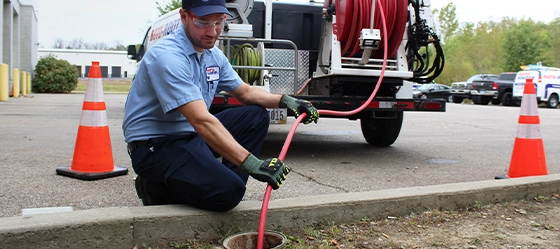
Hydro jetting cuts through that buildup with pressurized water, restoring full flow in pipes that mechanical snaking alone cannot clear. Roto-Rooter's experienced plumbing technicians bring industrial-grade hydro jetting equipment directly to your property, ready to clean residential and commercial drain lines on the first visit.
Available 24/7, 365 days a year for emergency and scheduled hydro jetting.
Fully licensed and insured with experienced plumbing technicians who calibrate equipment for Detroit's older pipe materials.
Video camera inspection before and after jetting to confirm results and identify structural concerns.
No overtime charges - same rate at noon or midnight.
Call Roto-Rooter at 313-223-1212 or schedule service online to get your drains cleared.
What Detroit's Aging Infrastructure Puts Inside Your Pipes
The plumbing challenges in Detroit run deeper than a typical grease clog. The city's infrastructure age, combined sewer design, and harsh winters demand more aggressive cleaning methods.
Tree root intrusion - Mature elms, maples, and cottonwoods send roots through cracked clay joints and corroded cast iron seams, building dense root masses that trap debris and restrict flow.
Grease and sediment compaction - Combined sewer lines carry both wastewater and stormwater, allowing grease, sand, and organic material to compact into thick layers along pipe walls.
Mineral scale and corrosion deposits - Decades of water flow through cast iron pipes create internal rust scale and mineral deposits that narrow the pipe diameter year after year.
Freeze-thaw joint separation - Michigan winters push soil and pipe joints apart during freezing, then allow groundwater infiltration during spring thaw, washing sediment into the gaps.
Basement drain backups - Heavy rain events overwhelm combined sewers, pushing water back through basement floor drains and laundry connections. Many basements connect through clay tile laterals that have deteriorated over decades.
Construction debris in lines - Renovation activity across Midtown, Corktown, and revitalizing neighborhoods introduces drywall dust, mortar, and debris into aging drains.
Neighborhoods and Areas We Serve Across Detroit
Roto-Rooter provides hydro jetting throughout Detroit and surrounding communities.
Corktown and Mexicantown - Some of Detroit's oldest residential plumbing, with clay tile sewer laterals dating to the early 1900s. Tree roots and joint separation are the primary concerns.
Midtown and New Center - Historic apartment buildings and renovated commercial spaces where cast iron drain stacks collect decades of mineral scale and grease.
Southwest Detroit - Combined sewer connections that experience frequent basement backups during heavy rain.
Palmer Woods and Sherwood Forest - Established neighborhoods where large mature trees aggressively infiltrate aging sewer laterals.
Dearborn, Hamtramck, Grosse Pointe, and Redford - Surrounding communities with similar infrastructure age and freeze-thaw exposure.
Operated as an Independent Contractor - All available services, hours of operations, pricing structure, and guarantees may vary by location
Frequently Asked Questions
What is hydro jetting and how does it differ from regular drain cleaning?
Hydro jetting uses a specialized nozzle to blast pressurized water through pipes, scouring the entire pipe wall clean. Standard drain cleaning uses a mechanical cable to punch through blockages but leaves buildup along the walls. Hydro jetting removes grease, mineral scale, root fragments, and sediment that cables leave behind, restoring the pipe to its full diameter.
Is hydro jetting safe for Detroit's older cast iron and clay tile pipes?
Yes, when performed by experienced plumbing technicians who adjust pressure settings to match pipe material and condition. Roto-Rooter runs a video camera inspection before jetting to identify structural issues. Pipes with significant deterioration are flagged for repair rather than jetting.
How often should Detroit homeowners schedule hydro jetting?
For homes with original cast iron or clay tile pipes, annual hydro jetting prevents the gradual buildup that causes emergency backups. Properties with mature trees near sewer lines may benefit with jetting every six months. Newer homes with PVC pipes typically need jetting less frequently.
Can hydro jetting prevent basement flooding during heavy rain?
Hydro jetting removes the buildup that reduces pipe capacity, allowing your sewer line to handle higher water volumes during storms. In Detroit's combined sewer areas, a clean main line is less likely to back up into basement floor drains. Pairing hydro jetting with a backwater valve provides strong protection.
Does hydro jetting remove tree roots from sewer lines?
Hydro jetting flushes out root fragments and smaller intrusions effectively. For dense root masses, our technicians first cut through roots with a mechanical cable, then follow with hydro jetting to flush fragments and clean pipe walls. This combination clears the blockage and slows regrowth.
How long does a residential hydro jetting service take?
Most residential jobs take one to two hours, including camera inspection, jetting, and post-cleaning verification. Our technicians arrive with fully equipped vehicles so there is no waiting for additional equipment.
Can Roto-Rooter hydro jet commercial drain lines in Detroit?
Roto-Rooter provides commercial hydro jetting for restaurants, manufacturing facilities, apartment buildings, and retail properties across Detroit. Our equipment handles lines up to 10 inches in diameter with scheduled maintenance programs available.
Serving the entire Detroit metro area, Including:
Counties in the Detroit Metro Area
Financing Options for Detroit Hydro Jetting Services
Roto-Rooter offers convenient financing through Synchrony Bank to help manage the cost of hydro jetting services. The Synchrony Home Design credit card provides affordable monthly payment plans, allowing you to address urgent plumbing issues without delay.
Our technicians provide honest, transparent pricing before work begins. You will know the full cost upfront with no hidden fees. Financing approval takes just minutes and can be completed on-site during your appointment.
When Hydro Jetting Is the Right Call for Your Detroit Property
Not every clogged drain requires hydro jetting. Our technicians evaluate each situation to recommend the right approach.
Recurring clogs return within weeks or months - If mechanical cleaning provides only temporary relief, buildup along pipe walls is feeding new blockages. Jetting removes that buildup entirely.
Grease has coated commercial kitchen lines - Detroit restaurants and food service operations generate grease loads that cables cannot fully address. Hydro jetting strips grease completely.
Root fragments remain after cable cleaning - Cables cut through root masses but leave fragments on pipe walls. Hydro jetting flushes those fragments out, slowing regrowth.
Slow drains affect multiple fixtures - When kitchen sinks, showers, and basement drains all move slowly, the main sewer line has buildup that only jetting can remove.
Basement floor drains are gurgling or backing up - In Detroit homes with below-grade living space, basement drains connected to the combined sewer are early warning indicators that the main line needs cleaning.
Hydro jetting is not recommended for pipes with visible collapse or severe deterioration where structural repair is needed first. The initial camera inspection identifies these conditions before jetting begins.
What to Expect During Your Hydro Jetting Service
A mechanical cable punches a hole through a blockage. Hydro jetting scours the entire pipe wall clean. That difference matters in Detroit, where decades of buildup coat pipe interiors with grease, mineral scale, and root fragments that a cable pushes aside. Roto-Rooter's process follows a specific sequence to protect your pipes and deliver thorough results.
Video camera inspection - A fiber-optic camera surveys the pipe interior to identify blockage type, pipe material, and structural condition before jetting begins.
Pressure calibration - Technicians adjust water pressure based on pipe material and diameter. Older clay tile and cast iron pipes receive controlled pressure that removes buildup without stressing aged joints.
Forward and reverse jetting - Specialized nozzles direct water streams both forward and backward, cutting through blockages while pulling debris toward the access point for removal.
Post-jetting camera verification - A second camera pass confirms pipe walls are clean and no structural issues need attention.
The result is a pipe restored to its original interior diameter - not just a narrow channel drilled through the blockage. For Detroit homes with 50-year-old cast iron or clay lines, that restored capacity means the difference between reliable drainage and recurring basement backups.
Between service visits, simple habits extend drain life. Wipe pans before washing and dispose of cooled cooking oil in a sealed container. Insulate exposed basement pipes before winter to reduce burst pipe risk. Install a backwater valve if your home connects to the combined sewer, and clear outdoor drains of leaves and ice melt residue during spring thaw.

Same-Day Hydro Jetting in Detroit
Call Roto-Rooter for 24/7 Hydro Jetting in Detroit

SPECIAL FINANCING AVAILABLE
We have partnered with Synchrony Bank to offer financing options to make your plumbing repair expenses as convenient and stress-free as possible.