Water Heater Installation in Stockton, CA
Delta Water Blends and Valley Heat Create a Tough Job for Stockton Water Heaters
Stockton sits at the confluence of the San Joaquin and Sacramento River Delta system, and the city's water supply reflects that geography. Cal Water delivers a blend of treated Delta surface water and groundwater pumped through deep wells. The hardness of that blend fluctuates throughout the year - groundwater zones produce levels around 13 to 15 grains per gallon, while treated surface water measures much softer at 3 to 4 grains per gallon. During drought years, when Delta inflows decrease and groundwater pumping increases, mineral content spikes and scale formation accelerates inside water heaters.
San Joaquin Valley summers push temperatures above 100 degrees for extended stretches, creating sustained household demand for hot water through frequent showers, laundry loads, and dishwashing. While warmer incoming water temperatures reduce the energy needed to heat each gallon, the constant operational demand wears components faster. A water heater that sits idle for hours in mild climates runs nearly continuously during a Stockton summer.
Roto-Rooter has been a trusted plumbing company since 1935. Our Stockton technicians understand how Delta water variability and Central Valley heat affect water heater performance and equipment selection.
Available 24/7, 365 days a year for emergency water heater replacement and installation.
Roto-Rooter is fully insured with experienced plumbing technicians.
Free estimates provided before any installation work begins. No extra charge for nights and weekends.
Full assessment of existing plumbing, gas lines, and electrical capacity before installation.
Call Roto-Rooter at 209-465-2616 or schedule service online to discuss water heater installation for your Stockton home.
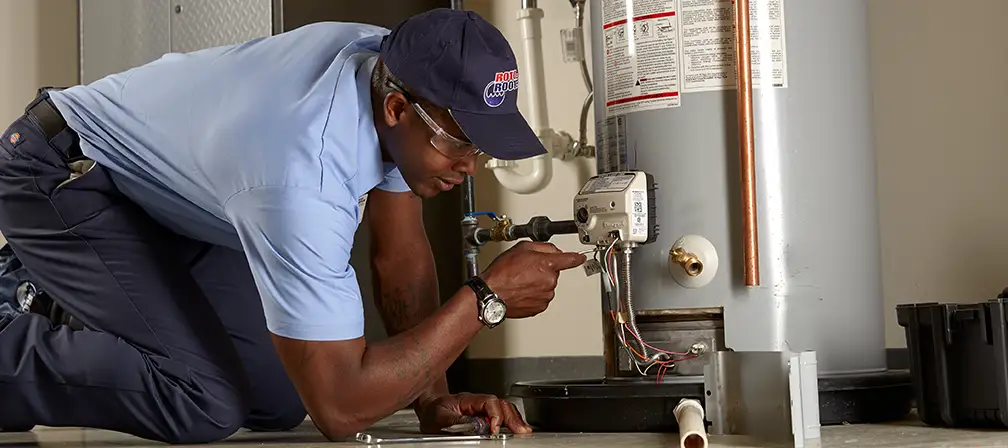
Water Heater Options for Central Valley Conditions
Stockton's variable water hardness and hot climate require equipment that can handle mineral buildup while delivering reliable output during peak summer demand. Roto-Rooter technicians consider your neighborhood's water source when recommending the right unit.
Roto-Rooter installs the following water heater types in Stockton:
- Conventional tank water heaters (gas): Available in 40, 50, and 75-gallon capacities. Gas units deliver fast recovery times that keep pace with Stockton's high summer demand. Glass-lined tanks resist scale adhesion in the city's variable-hardness water supply.
- Conventional tank water heaters (electric): A solid choice for Stockton homes without natural gas service. Electric elements are individually replaceable when hard water scale eventually affects heating performance - a practical benefit given Stockton's mineral-heavy groundwater.
- Tankless water heaters (gas): On-demand heating eliminates standby energy loss. In Stockton, tankless units require annual descaling to prevent mineral deposits from narrowing heat exchanger passages, especially during years when the water blend shifts toward harder groundwater sources.
- Tankless water heaters (electric): Whole-house and point-of-use options that heat water as it flows. No venting required. Stockton's warm incoming water temperatures help electric tankless units maintain strong flow rates throughout the year.
- High-efficiency condensing units: Extract additional heat from exhaust gases for efficiency ratings above 90%. PVC venting simplifies installation in Stockton garages where traditional metal flue routing can be challenging.
- Hybrid heat pump water heaters: Pull heat from surrounding air and use roughly 60% less electricity than standard electric tanks. Stockton's hot garage temperatures during summer months make heat pump units exceptionally efficient in this market.
Stockton Neighborhoods and Plumbing Realities
Stockton's development stretches across nearly two centuries, creating wide variation in plumbing infrastructure across the city.
Downtown Stockton and the Magnolia District contain homes built from the early 1900s through the 1940s, with galvanized steel supply lines and older gas piping. These neighborhoods receive water primarily from groundwater wells, meaning consistently harder water that deposits more scale in pipes and water heaters. Installing a new unit in these areas often involves upgrading corroded supply connections and verifying gas line capacity.
Lincoln Village, developed in the 1960s and 1970s, features ranch-style homes with copper piping that has carried hard groundwater for over 50 years. Internal mineral deposits can restrict flow to the water heater, reducing hot water pressure throughout the home. Many of these homes still have their original 40-gallon water heaters, undersized for today's larger households.
Brookside and Spanos Park feature newer construction with copper and PEX plumbing, properly sized gas lines, and modern electrical panels that accommodate high-efficiency and tankless installations without significant modifications.
Roto-Rooter technicians evaluate these neighborhood-specific conditions before recommending a water heater model for your Stockton home.
Serving the entire Stockton metro area, Including:
Counties in the Stockton Metro Area
Warning Signs Your Stockton Water Heater Needs Replacement
- Rusty or discolored hot water: Brown or rust-colored water from hot taps indicates interior tank corrosion. Once the tank lining fails, replacement is the only reliable fix.
- Rumbling or popping noises: Sediment hardened at the bottom of the tank traps water underneath, causing steam pops when the burner fires. Stockton's variable water hardness accelerates sediment accumulation during drought years when groundwater dominates the blend.
- Water pooling around the base: Any moisture near the water heater suggests a tank leak or failing connections. Even small leaks in a Stockton garage can cause damage to stored items and drywall before they are noticed.
- Inconsistent hot water temperature: Fluctuating temperatures signal a failing thermostat, scaled heating element, or a tank that can no longer keep up with household demand.
- Age beyond 8 to 10 years: Tank water heaters in Stockton's variable-hardness water conditions may reach end of life sooner than units in softer water areas. Proactive replacement avoids emergency failures.
- Rising utility bills: A gradual increase in gas or electric costs without changes in usage points to a water heater working harder to overcome scale buildup and component wear.

Same-Day Water Heater Installation in Stockton
Call Roto-Rooter for Water Heater Installation in Stockton

SPECIAL FINANCING AVAILABLE
We have partnered with Synchrony Bank to offer financing options to make your plumbing repair expenses as convenient and stress-free as possible.