San Diego Water Heater Repair: Combatting Hard Water Scale & Mineral Corrosion 24/7
Signs You Need Professional Water Heater Repair in San Diego CA
San Diego's hard water, coastal salt air, and Colorado River mineral content put the region's water heaters under stress that accelerates failure beyond standard expectations. Here are the signs your water heater is telling you it needs professional attention:
- Inconsistent Hot Water  Sediment on Heating Elements: When hot water runs out faster than it used to or temperature fluctuates between fixtures, sediment accumulation on heating elements is almost always the cause in San Diego. Colorado River mineral content deposits calcium and magnesium on tank floors and elements continuously  building insulating layers that force elements to work harder and fail sooner. A water softener significantly reduces mineral accumulation and extends water heater lifespan across the region.
- Rumbling or Popping Sounds  Sediment Overheating: A deep rumbling during heating cycles means water trapped beneath a sediment layer is superheating and forcing its way through. In San Diego's hard water environment this develops faster than most homeowners expect  it is the water heater signaling it is working significantly harder than it should be.
- Discolored Hot Water  Tank Interior Corrosion: Rust-colored water from hot taps points to corrosion inside the tank. San Diego's hard water depletes anode rods faster than in softer water cities  once exhausted, the tank wall corrodes directly. In coastal neighborhoods where salt air compounds exterior tank corrosion simultaneously, discolored water frequently signals a unit approaching end of life.
- Water Pooling Around the Unit  Tank Leak or Fitting Failure: Standing water around the base of a water heater requires immediate attention. In San Diego's coastal properties where salt air accelerates corrosion on tank fittings and pressure relief valve components, a leak at the base can indicate either a failing fitting or a tank that has begun to corrode through  the latter cannot be repaired.
- Rising Energy Bills  Declining Efficiency: A water heater working harder to overcome sediment buildup consumes measurably more energy per heating cycle. In San Diego where utility costs are among the highest in California, an inefficient water heater compounds monthly bills in ways that become impossible to ignore over a full year.
- Unit Age  End of Serviceable Lifespan: Standard tank water heaters carry an eight to twelve year lifespan expectation. In San Diego's hard water and coastal environment that contracts  units without regular maintenance and anode rod replacement frequently reach end of life at the lower end of that range or below it.
Call 619-596-0888 or schedule online if you are experiencing any of these obvious signs of water heater problems.
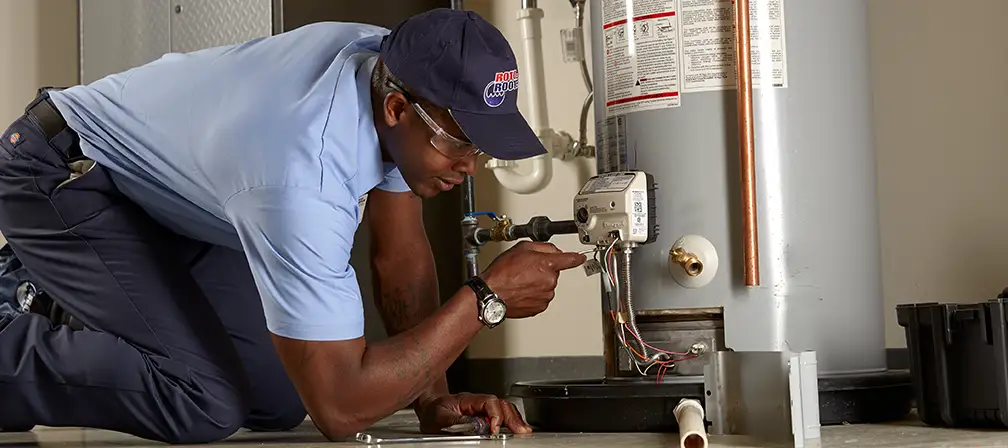
Why You Shouldn't Ignore Water Heater Problems in San Diego
A lukewarm shower or an unfamiliar sound from the utility closet is easy to put off  but in San Diego's hard water and coastal environment, water heater problems that go unaddressed deteriorate faster than most homeowners expect. Here is what happens when the warning signs are ignored:
- Sediment buildup becomes irreversible: Once calcium and magnesium deposits on heating elements reach a critical thickness, element replacement becomes necessary rather than a simple flush  escalating the repair cost significantly and shortening the remaining useful life of the unit.
- Anode rod depletion accelerates tank corrosion: San Diego's hard water depletes anode rods faster than in softer water cities. A depleted rod left unreplaced allows tank wall corrosion to advance unchecked  and a corroded tank cannot be repaired, only replaced.
- Salt air compounds exterior deterioration in coastal properties: In Ocean Beach, Pacific Beach, Mission Beach, and La Jolla, exterior tank and fitting corrosion from salt air accelerates alongside internal sediment buildup  creating two simultaneous deterioration pathways that shorten the window between warning signs and unit failure.
- A leaking tank in an enclosed space creates mold risk: San Diego's mild but humid coastal climate means water escaping a tank fitting or corroded base in a closet or utility space creates mold conditions in surrounding building materials faster than dry inland climates.
- Repair costs more than replacement  eventually: A component failure caught early is a straightforward repair. The same unit left until the tank corrodes through becomes an emergency replacement  on a timeline and at a cost the homeowner doesn't control.
Operated as an Independent Contractor - All available services, hours of operations, pricing structure, and guarantees may vary by location
Frequently Asked Questions
How does San Diego's hard water affect water heater lifespan?
Significantly. Colorado River water delivered through the County Water Authority deposits calcium and magnesium scale on heating elements and tank floors continuously — reducing heating efficiency, accelerating element failure, and depleting anode rods faster than in softer water cities. Annual tank flushing and periodic anode rod inspection are the two most impactful maintenance steps a San Diego homeowner can take to extend water heater lifespan. In coastal neighborhoods, scheduling these alongside a check of exterior fittings and connections for salt air corrosion is particularly worthwhile.
How often should I flush my water heater in San Diego CA?
Annually at minimum — and for properties in coastal neighborhoods or with particularly hard water, twice yearly is a reasonable schedule. Annual flushing removes the sediment layer that Colorado River mineral content deposits on the tank floor, restoring heating efficiency and reducing strain on elements. It is one of the most consistently skipped and most cost-effective water heater maintenance steps available to San Diego property owners.
Tank or tankless — which is better for San Diego properties?
Both have genuine tradeoffs in San Diego's hard water environment. Tankless systems offer significant energy efficiency advantages and longer theoretical lifespan — but their heat exchangers are more vulnerable to mineral scale buildup from San Diego's Colorado River water supply and require more frequent descaling to maintain efficiency. Tank systems are more forgiving of hard water with regular maintenance. The right choice depends on usage patterns, property type, and budget. Roto-Rooter walks through both options honestly before any replacement decision is made.
How long does water heater repair take in San Diego?
Most component repairs — thermostat replacement, heating element swap, pressure relief valve replacement, anode rod service — are completed in a single visit. Full unit replacement including draining, disconnection, installation, and testing typically takes two to four hours depending on unit type, location, and whether the installation requires updated connections to meet current San Diego building code requirements.
Serving the entire San Diego metro area, Including:
Counties in the San Diego Metro Area
Financing for Water Heater Repair in San Diego CA
Water heater failures in San Diego rarely arrive at a financially convenient moment  and in a city where the cost of living leaves little room for unplanned expenses, an unexpected repair or replacement bill compounds the stress of losing hot water. Roto-Rooter offers flexible financing options so San Diego homeowners and property operators can address water heater repair or replacement immediately rather than managing without hot water while waiting for a better moment. Ask us about payment plans when you call.
Repair vs. Replace  How to Know Which Your San Diego Water Heater Needs
When a San Diego water heater starts showing problems, the repair vs. replace decision comes down to a few factors specific to the region's hard water and coastal environment. Here is how to know which makes sense:
- Age is the primary factor: Under six years old with a repairable component failure  heating element, thermostat, anode rod  repair is almost always the right call. Over ten years old in San Diego's hard water and coastal conditions, replacement delivers better long-term value regardless of the specific failure.
- The nature of the failure determines the options: Component failures are repairable. A corroded or leaking tank is not  once a tank has begun to leak or shows exterior rust through, replacement is the only responsible recommendation.
- Repair cost as a percentage of replacement: A repair exceeding fifty percent of a new unit's installed cost rarely makes financial sense  particularly in San Diego where ongoing hard water and salt air demands on an aging unit don't diminish after a single fix.
- Coastal properties warrant earlier replacement consideration: Salt air corrosion compounds internal hard water deterioration in Ocean Beach, Pacific Beach, and La Jolla properties. A unit showing external corrosion alongside internal sediment buildup in a coastal San Diego property is closer to end of life than its age alone suggests.
- Tank vs. tankless is worth evaluating at replacement time: Roto-Rooter walks through both options honestly  energy efficiency, hard water maintenance requirements, upfront cost, and long-term value  before any replacement recommendation is made.

Same-Day Water Heater Repair in Sandiego
Available 24 Hours for Water Heater Repair Across San Diego CA

SPECIAL FINANCING AVAILABLE
We have partnered with Synchrony Bank to offer financing options to make your plumbing repair expenses as convenient and stress-free as possible.