Sewer Line Repair in Riverside, CA
Inland Empire Clay, Hard Water, and Mature Trees Keep Riverside Sewer Lines Under Strain
Riverside sits in the heart of the Inland Empire, where expansive clay soils swell during winter rains and contract through the dry, hot summers that push temperatures well above 100 degrees. This seasonal soil movement flexes buried pipes and joints, opening gaps that accumulate damage year after year. The city's hard water adds another layer of stress - mineral deposits coat pipe interiors and progressively narrow flow capacity until blockages become routine.
Riverside's mature urban tree canopy includes eucalyptus, pepper trees, and ornamental species that send aggressive root systems into aging pipe joints without a dormant season to slow their advance. Many homes built during the city's mid-century expansion still rely on clay tile, cast iron, or early Orangeburg sewer laterals that have absorbed decades of soil movement, root pressure, and mineral buildup. Natural soil settlement over time creates sagging lines where waste pools and repeat blockages form.
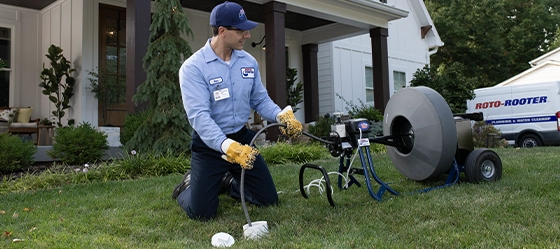
Roto-Rooter provides comprehensive sewer line repair throughout Riverside, CA. Our experienced plumbing technicians understand the demands that Inland Empire clay, hard water chemistry, and aging pipe materials place on residential and commercial sewer systems across the city.
- Full sewer line inspection, repair, and replacement: Covering clay tile, cast iron, Orangeburg, and PVC systems
- Trenchless repair options: Restore pipes without excavating through yards and driveways
- Video camera inspection: Pinpoint cracks, root masses, and mineral buildup
- Root removal and scale clearing: Restore full pipe flow capacity
- Available 24/7, 365 days a year: Emergency sewer response when your line fails
Call Roto-Rooter at 951-892-7051 or schedule your sewer line service online.
What Breaks Sewer Lines Across Riverside
Sewer line failures in Riverside follow patterns driven by the region's clay soils, hot climate, and construction history.
- Expansive clay soil movement: Riverside's clay soils swell when saturated and shrink during dry periods, creating ground movement that stresses underground pipes. This seasonal cycling cracks rigid pipe materials, separates joints, and creates bellied sections where waste pools and clogs form.
- Hard water mineral deposits: Riverside's water carries high concentrations of calcium and magnesium that coat pipe interiors with scale. This buildup narrows flow capacity over time and creates rough surfaces that catch debris, accelerating blockage formation.
- Year-round root intrusion: Riverside's warm climate supports tree root growth 12 months a year. Eucalyptus, pepper trees, and citrus root systems aggressively seek moisture in sewer pipes, entering through deteriorated joints and expanding until they fill the pipe interior.
- Aging pipe material failure: Homes built during the 1950s through 1970s commonly have clay tile, cast iron, or Orangeburg (tar paper) sewer laterals. Orangeburg deteriorates and collapses under soil weight, cast iron corrodes internally, and clay tile cracks at stressed joints.
- Soil settlement and pipe sagging: Natural ground settling over time creates low spots in sewer lines where waste collects and blockages form. The combination of clay soil compaction and irrigation-driven soil moisture fluctuations accelerates this settling pattern.
Riverside Neighborhoods Where Sewer Lines Face Elevated Risk
Sewer line condition varies across Riverside based on construction era, soil composition, and tree density.
- Wood Streets and Mission Inn district: These historic areas contain homes dating to the early 1900s with some of the oldest residential sewer laterals in the city. Mature trees and aging clay tile pipes create persistent root intrusion challenges.
- Arlington Heights and Magnolia Center: Mid-century development with cast iron and clay laterals that are now 50 to 70 years old. Established landscaping drives root growth into deteriorating pipe connections across these residential streets.
- Canyon Crest and University area: Hillside terrain places gravitational stress on buried pipes, and clay soil on the slopes experiences aggressive moisture cycling. Properties near the Santa Ana River drainage face additional soil pressure.
- La Sierra and Arlanza: Postwar construction installed laterals during the 1960s and 1970s that are approaching or have passed their expected lifespan. Flat terrain in these areas makes pipe bellying and settlement particularly common.
Serving Riverside and surrounding communities, Including:
Counties in the Riverside Area
Warning Signs Your Riverside Sewer Line Needs Attention
Inland Empire clay and year-round root growth create gradual damage that worsens over time. Watch for these indicators.
- Multiple slow drains throughout the house: When several fixtures drain slowly simultaneously, the blockage is in the main sewer lateral.
- Sewage odors in the yard: A cracked lateral leaks sewage into surrounding soil, producing noticeable odors near the ground surface.
- Unusually green or lush patches in the lawn: Sewage leaking underground fertilizes soil above the damaged pipe section.
- Gurgling sounds during water use: Air trapped in a partially blocked lateral escapes through fixture drains.
- Sewage backups through floor drains: Raw sewage backing up through the lowest drains signals a serious blockage or collapse.

Same-Day Sewer Line Repair in Riverside
Call Roto-Rooter for Sewer Line Repair in Riverside - Available 24/7

Frequently Asked Questions
How do I know if my sewer line needs repair?
When multiple drains back up simultaneously, sewage odors appear in your yard, or you notice wet spots along the pipe path, the main sewer lateral is likely compromised. Roto-Rooter uses video camera inspection to determine whether the pipe needs clearing, repair, or replacement.
Does Riverside's clay soil damage sewer pipes?
Yes. Riverside's expansive clay swells when saturated and contracts during dry periods, creating ground movement that cracks rigid pipe materials and separates joints. This soil-driven damage is a leading cause of sewer line failure across the Inland Empire.
What trenchless options are available?
CIPP lining coats the pipe interior with structural resin, restoring flow without excavation. Pipe bursting replaces the old pipe by pulling new material through it. Both methods work on clay tile, cast iron, Orangeburg, and PVC pipes when the existing line qualifies after video inspection.
How long does sewer line repair take?
Trenchless lining and spot repairs typically complete within one day. Conventional excavation may take two to three days depending on pipe depth and soil conditions. Your Roto-Rooter technician provides a time estimate after inspection.
Can tree roots be permanently removed from sewer lines?
Roots can be cut and cleared using hydro jetting or mechanical cutting, but Riverside's year-round growing season means they regrow quickly. Trenchless pipe lining creates a seamless interior surface that eliminates root entry points permanently.
What is an Orangeburg pipe, and do Riverside homes have them?
Orangeburg pipes are made of compressed tar paper and were commonly installed during the 1950s and 1960s. They deteriorate over time, becoming soft and collapsing under soil weight. Many Riverside homes built during this era still have Orangeburg laterals that need replacement.
How often should I have my sewer line inspected?
Riverside homes with pre-1980 pipes, mature trees near the sewer path, or recurring slow drains should have a video inspection every two to three years. Proactive inspection catches soil-driven damage and root intrusion before emergency backups occur.
SPECIAL FINANCING AVAILABLE
We have partnered with Synchrony Bank to offer financing options to make your plumbing repair expenses as convenient and stress-free as possible.