Sewer Line Excavation and Trenchless Options in Richmond
Key Takeaways: What Soft Ground Changes About a Sewer Dig in Richmond
- A sewer line that has been cleared and then failed again in the same spot has a structural problem, and structure is what a camera inspection is for.
- Ground behavior sets the job on the Richmond flats: young bay sediment and filled ground hold water and will not stand as a vertical trench wall on their own.
- Shoring is a safety requirement wherever a trench reaches working depth in loose or saturated material, and it is part of the work rather than an add-on.
- A shallow water table means a trench can take on water as it is opened, so dewatering and a wider working footprint get planned before the machine arrives.
- That is exactly why trenchless earns a serious look in Richmond, since pipe bursting and lining open two small pits instead of a long run of unstable trench.
- Trenchless still has conditions. A collapsed section, a lost grade, or no working access at one end will take it off the table, and the footage says which.
- Roto-Rooter is fully licensed and insured, handles permits and inspection, and puts an on-site estimate in your hands before any work begins.
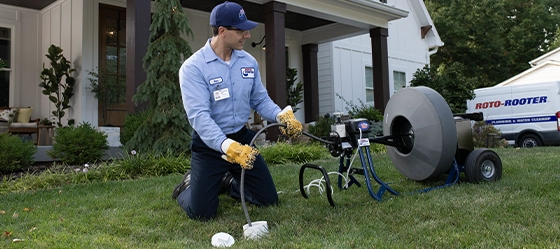
On the flat ground near the shoreline, the demanding part of a sewer excavation in Richmond is keeping the hole open long enough to work in it. The pipe repair itself is ordinary. The material around it is not. Much of the flats is young sediment laid down at the edge of San Francisco Bay, some of it made ground placed during the rail and shipyard build-out, and that mixture is loose, wet and low in cohesion. Cut a vertical face in it at depth and the face wants to come back into the hole.
The hills on the east side of Richmond behave differently. Firmer material stands better, the water table sits deeper, and a trench there looks more like a trench anywhere else in California. One franchise covers both, which is why the first questions on this service are always where the property sits and what the ground under it is made of.
Most households in Richmond arrive at this service the same way. A drain slowed, a cable cleared it, and a few months later the same line went again in the same place. Repeat failure at one point is the signal that the pipe carries a defect cleaning cannot reach, and that is where the conversation should move from clearing the line to looking inside it.
What the Footage Has to Show Before an Excavation Is Quoted
No responsible crew opens ground on a hunch. A camera inspection runs the sewer lateral, records the defect and locates it with a depth, and that recording is the evidence the whole job is built on. It answers whether the line is structurally failed or simply dirty, where along the run the failure sits, how far down it is, and whether the remaining pipe is sound enough for a trenchless method to follow. A line with roots through one joint, a line crushed at a single point and a line that has lost its grade look identical from a fixture inside the house and call for three different repairs.
What does trenchless sewer line replacement need in order to work here?
Pipe bursting pulls a new pipe along the route of the old one while a head splits the original outward. Cured-in-place lining cures a new pipe inside the existing one. Both are attractive in Richmond precisely because they open two small excavations instead of a long trench through material that will not hold a wall, and because they leave more of the surface untouched. Both also come with requirements that the inspection has to confirm.
- Continuity: enough of the original pipe has to remain in place for a head or a liner to follow, so a fully collapsed section rules the method out.
- Access at both ends: a launch pit and a receiving pit have to be reachable, and a tight side yard or a shared drive can settle that question quickly.
- Grade: both methods inherit the path of the old pipe, so a run that has settled into a sag needs the bed rebuilt, which only an open trench allows.
- Surrounding ground: bursting displaces material outward, and very soft or very congested ground changes whether that is acceptable.
Where a routine clog is the real problem, this is the wrong page and the cheaper answer applies. See drain cleaning in Richmond for lines that are blocked but sound.
Serving Richmond and surrounding communities, Including:
Counties in the Richmond Area
Where the Sewer Lateral Ends and the Public Main Begins
The sewer lateral is the privately owned pipe running between the building and the public main under the street. The general pattern is that the property owner is responsible for the lateral and the agency is responsible for the main, but the point where one becomes the other is set by local ordinance and it genuinely varies. Some jurisdictions run owner responsibility all the way to the connection at the main. Others stop it at the property line or the curb. Richmond property owners should have that confirmed for their own address, and the crew does that before scoping the repair. Roto-Rooter works the private side. Main work under the street belongs to the agency that owns it, and we do not take it on.
Backfill and Compaction After an Excavation in Wet Ground
Closing the trench well is what makes the repair last. The bed is built and the new pipe is laid to grade and tested, then backfill goes back in lifts with compaction between them. In wet, low-cohesion material this is the step that deserves the most patience, because a trench filled loosely will consolidate over the following winters and drag the new pipe down into a fresh low spot. The surface tells you when it was done badly: a soft strip that sinks a little every rainy season, tracing the line of the dig. Winter rain in this part of California arrives in a concentrated stretch, so a trench in Richmond that was closed loosely shows itself in the first wet season rather than years later.
Keeping Water Moving While the Repair Is Scheduled
A permit and a machine take planning, and the household still has to function in the meantime. Roto-Rooter is available 24/7, 365 days a year, and a crew can keep a failing line running while the replacement is arranged. If the line is actively backing up right now, emergency plumbing in Richmond is the faster route, and where water has already reached flooring or framing, water damage restoration in Richmond handles the cleanup. Everything else we do here is listed on the Roto-Rooter page for Richmond.
Book a Camera Inspection and an On-Site Estimate in Richmond
Roto-Rooter has been solving sewer and drain problems since 1935, and the plumbing peace of mind on a job like this comes from knowing what is under the ground before anyone opens it. Call 510-621-1482 to put a camera down the line, or schedule online, and you will have an on-site estimate before any work begins.

Shoring, Dewatering and Why the Trench Sets the Pace
Utility Locating in an Old Rail and Refinery Street Grid
