Commercial Flushometer Installation & Repair Services
Savvy business owners and managers know that keeping restrooms operational for the comfort of customers and employees is important. Flushometers offer a more powerful and reliable flushing system for commercial grade toilets. They clog less than residential flush toilets and are more tamper-proof. Roto-Rooter maintains, repairs and installs Flushometer toilet and urinal systems for your business.
*Service offerings may vary by location
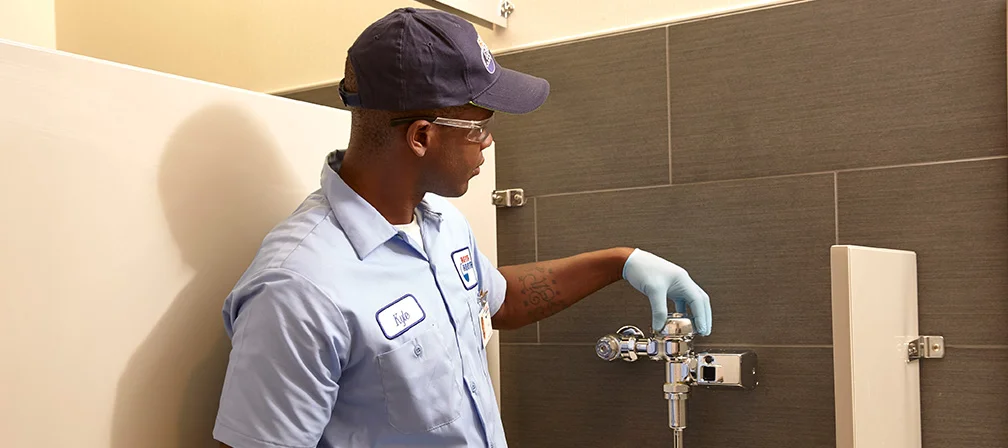
The Roto-Rooter Difference in Professional Flushometer Installation and Repair
With decades of plumbing experience and nationwide reach, Roto-Rooter has the tools, training, and expertise to service all types of flushometer valves. Here’s what sets our team apart:
- Licensed and Insured Technicians with experience across all major flushometer models and manufacturers
- 24/7 Emergency Service for sudden leaks, flushing failures, or non-stop running toilets
- Digital Diagnosis Tools to identify internal valve damage, clogs, or low-pressure issues
- Same-Day Flushometer Replacements in most metro areas
- Preventive Maintenance Plans to reduce...
How Does a Flushometer Work?
A flushometer is a commercial-grade flushing device typically found on wall-mounted toilets and urinals in public and commercial restrooms. Unlike traditional gravity-flush toilets that use a water tank, a flushometer connects directly to a pressurized water supply line. When activated, either manually or automatically, the flushometer valve opens and immediately releases a measured amount of water directly into the bowl.
Key parts of a flushometer include:
- Control Stop Valve – regulates water supply to the unit
- Diaphragm Assembly or Piston Assembly – controls water pressure and timing of the flush
- Handle or Sensor Assembly – manual lever or motion sensor to activate the flush
- Vacuum Breaker – prevents backflow into the water supply
- Spud Coupling – connects the valve to the toilet or urinal
This pressure-based system allows for rapid and consistent flushes, making it ideal for high-use environments. But due to their complexity, flushometers require specialized expertise for troubleshooting and repair.

Commercial Flushometer Services
How to Determine if Your Flushometer Has Gone Bad
