Sewer Line Repair in Overland Park, KS
Kansas City Clay and the Pipes Buried Beneath Overland Park
Overland Park sits on clay-heavy soil that acts like a sponge - swelling during heavy rain and shrinking during drought. This constant moisture cycling creates ground movement that cracks underground pipes and separates joint connections year after year. Many Kansas City-area neighborhoods were built with clay sewer pipes that have a limited tolerance for this shifting ground, and homes in established areas like Brookridge, Nottingham Forest, and Indian Creek still rely on original plumbing installed in the 1960s and 1970s.
Those clay pipes are brittle by nature. They crack when soil shifts, and tree roots break through the joints where mortar seals have deteriorated. Add Kansas freeze-thaw cycles that drive frost deep into the ground every winter, and the cumulative stress on buried sewer lines becomes significant. Roto-Rooter has provided professional sewer line repair since 1935. Our experienced plumbing technicians understand the pipe materials, soil behavior, and seasonal conditions specific to properties throughout the area.
Call 913-682-2222 or schedule service online.
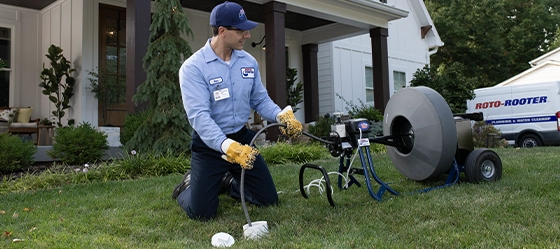
What Causes Sewer Line Failure Here
The combination of reactive clay soil, freeze-thaw cycling, and aging clay pipe infrastructure creates sewer line failures specific to the Kansas City metro area.
- Clay soil shrink-swell cycling: The clay soil swells during heavy rain and shrinks during drought, creating constant underground movement. Foundation movement and shifting that cracks underground pipes is a direct result of this cycling, and the damage compounds with each seasonal transition.
- Clay pipe brittleness: Many area homes were built with clay sewer pipes that crack under soil pressure, and tree roots break through joints where mortar has deteriorated. Clay pipe sections shift out of alignment when the surrounding soil moves, creating offset joints and bellied sections.
- Freeze-thaw ground movement: Kansas winters drive frost several feet deep, and the expansion of frozen ground shifts buried pipe sections. Spring thaw reverses the movement, but pipe joints may not return to their original alignment. Sudden temperature swings between seasons add additional thermal stress.
- Tree root invasion: Mature landscaping across established neighborhoods sends roots searching for moisture underground. Oaks, maples, and other deep-rooted species penetrate clay pipe joints and expand inside the line with enough force to split the pipe wall.
- Cast iron and galvanized pipe corrosion: Homes with cast iron or galvanized sewer connections experience internal corrosion that weakens pipe walls over 40 to 60 years. The moisture-retaining clay soil accelerates external corrosion as well.
Frequently Asked Questions
Are clay sewer pipes still common in Overland Park?
Yes. Many homes built in the 1960s and 1970s still have original clay sewer laterals. Clay is brittle and vulnerable to soil movement, root intrusion, and freeze-thaw damage. A camera inspection reveals the current condition of your clay pipes and identifies damage before it causes a backup. Call ${phone} to schedule.
How does freeze-thaw cycling damage sewer lines?
When soil freezes, it expands and shifts buried pipe sections. Spring thaw reverses the movement, but joints may not realign. After decades of annual cycling, joints separate permanently, rigid pipe materials crack, and the line develops low spots that trap waste and attract root growth.
Can trenchless methods replace clay sewer pipes?
Trenchless pipe lining creates a seamless interior surface inside existing clay pipe, sealing cracks and joint gaps without excavation. Pipe bursting replaces the clay pipe entirely with flexible HDPE that handles soil movement better. Both methods avoid disrupting landscaping, driveways, and sidewalks.
How long does sewer line repair take?
Trenchless lining and spot repairs typically complete in one day. Full line replacements may take two to three days depending on depth, soil conditions, and weather.
What are signs my sewer line needs repair?
Multiple slow drains, recurring backups, sewage odors in the yard, wet spots in dry weather, gurgling sounds when water runs, and foundation settling all indicate potential sewer line damage. Backups that occur after heavy rain suggest cracked joints allowing groundwater infiltration.
How often should older sewer lines be inspected?
Homes with clay or cast iron sewer connections installed before 1980 should have a camera inspection every three to five years. Properties with mature trees near the sewer line path benefit from more frequent monitoring to catch root intrusion early.
Does Roto-Rooter handle commercial sewer repair in Overland Park?
Roto-Rooter provides commercial sewer line inspection and repair for restaurants, retail centers, office buildings, and industrial properties. Our commercial equipment handles lines up to 10 inches in diameter with scheduled maintenance programs available.
Serving the entire Kansas City metro area, Including:
Counties in the Overland Park Area
Overland Park Neighborhoods and Sewer Conditions
Development across the area spans several decades, and each construction era installed different pipe materials beneath residential properties.
- Brookridge and Nottingham Forest: Established neighborhoods with homes built in the 1960s and 1970s. Original clay sewer pipes in these areas have absorbed decades of soil movement and freeze-thaw cycling. Mature landscaping drives persistent root intrusion into deteriorating pipe joints.
- Indian Creek and Leawood border: Development spanning the 1970s and 1980s with aging clay and early cast iron sewer connections approaching the end of their expected service life. The mature tree canopy throughout these neighborhoods compounds root pressure on weakened pipes.
- Downtown Overland Park and Metcalf corridor: A mix of commercial and residential properties with varied construction eras. Older sections have the most deteriorated pipe infrastructure, while newer redevelopment areas have modern PVC connections.
- Blue Valley and southern Overland Park: Later development with more modern pipe materials but the same reactive clay soil that creates ground movement challenges. Properties near the Blue River corridor experience additional moisture variability.
- Western Overland Park and 135th Street corridor: Newer suburban development on clay soil. While pipe materials are more durable, the clay still shifts with moisture changes and can stress connections over time.

Same-Day Sewer Line Repair in Overland Park
Overland Park's Trusted Sewer Line Repair Team

SPECIAL FINANCING AVAILABLE
We have partnered with Synchrony Bank to offer financing options to make your plumbing repair expenses as convenient and stress-free as possible.