Excavation and Sewer Line Replacement in North Las Vegas
Key Takeaways: When a Newer Line Loses Its Fall
- Age is rarely the problem here: much of the buried pipe under this city is modern plastic, so a failing lateral is usually a geometry question about slope, bedding and joints instead of a worn-out material.
- A belly holds water and catches solids: a low spot in an otherwise sound run clears easily, refills, and blocks again at the same measured distance, which is the pattern that brings excavation into the conversation.
- Camera inspection settles it: footage with a locator on the head gives depth and position, so a repair can be scoped to one section instead of the whole run.
- Pads were graded before houses went on them: cut and placed fill behave differently under a trench, and a joint that sits across the boundary between them is where movement shows up first.
- Utility locating happens before anything opens: power, gas, water, fiber and fire service all get marked, and in the warehouse district that corridor is crowded.
- The surface decides the method: a truck apron, a dock approach or a wide poured drive raises the value of pipe bursting or lining, where the line qualifies for either one.
- Permits ride with the work: Roto-Rooter handles the permit and inspection process for private sewer lateral work and stops at the property boundary, because the municipal main belongs to the city.
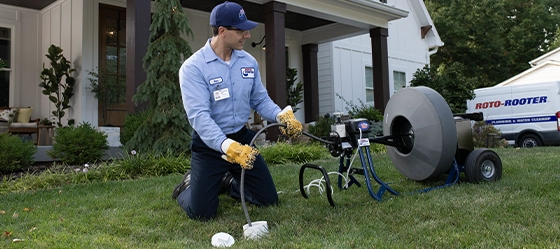
Most of North Las Vegas was built on ground that was leveled before anybody poured a footing. Desert land does not arrive flat, so pads get cut down in one place and filled up in another, and the sewer trench is then cut through whatever that pad turned out to be. The pipe laid in it is young, and that is exactly why the failures here look the way they do.
Why Excavation Comes Up on Pipe This Young
Plastic pipe does not corrode, and it does not go soft the way old cast iron does. What it does is follow the ground it was bedded in. Placed fill consolidates under load over years, undisturbed cut ground does not move at the same rate, and a run crossing between the two picks up a dip. Add a rock left in the backfill that point-loads one length, or bedding that was never graded properly along the trench, and the fall the pipe was installed with stops being the fall it has.
The symptom is specific and worth recognizing. The line clears without much argument, the household gets weeks of normal service, and then the same slow drain returns, and the cable or the jetter meets it at the same distance from the cleanout every time. That repetition is the tell. Camera footage with a locator on the head then gives two things an estimate needs: what the defect is, and how far down and how far out it sits.
Fill That Was Placed, and What It Does Underneath a Trench
Engineered fill is not a defect. It is how flat lots get made across this part of the Las Vegas Valley, and it is compacted and tested when it goes in. What matters for a buried line is that a trench cut back through it is a second disturbance, and the material put back around the pipe is only as good as the compaction it received on that day. Where cemented caliche is part of the spoil, the chunks bridge and leave voids, and voids close later. A dip of an inch or two across a long run is enough to hold water and start collecting solids.
Operated as an Independent Contractor - All available services, hours of operations, pricing structure, and guarantees may vary by location
Serving North Las Vegas and surrounding communities, Including:
Counties in the North Las Vegas Area
The Setback Is Long Here, and So Is the Lateral
Large-lot subdivision growth produced deep front setbacks, and a house set well back from the curb has a longer private run to the street than an older compact lot does. More length means more joints, more opportunity for a dip, and a longer trench when an open cut is the answer. It also means the useful question during an inspection is where along that run the defect sits, because a single bad section at a known distance can sometimes be replaced on its own while the rest of the pipe stays in the ground.
Access changes the price of finding out. A run with a proper cleanout at the building and a second one near the property line can be inspected from both directions, which makes a spot repair far easier to justify. A run with a single access point, or with the cleanout paved over during a later improvement, has to be worked from one end, and that is worth knowing before the camera goes down rather than in the middle of the visit. Where a property has no usable access at all, installing one is a small piece of excavation that pays for itself the first time the line needs attention.
Does a Bellied Sewer Line Have to Be Replaced?
A shallow sag that holds a film of water and never blocks can be monitored and cleaned on a sensible cadence. A sag deep enough to hold standing water across a length of pipe collects solids every time the household uses water, and cleaning it resets the clock without changing the slope. Once the camera shows the second pattern, excavating and re-laying that section on proper bedding is the repair that actually ends it. The measurement, the depth of the low point and how much of the run is affected all come off the footage.
Putting Back a Surface That Was Engineered in the First Place
Backfill on this ground gets treated as part of the repair. The new pipe is set on graded bedding so the fall is continuous, then the trench is filled and compacted in lifts and brought back to grade. Under a drive, an apron or a walk that compaction is the whole difference between a surface that holds and one that cracks along the line of the cut a year later.
- Bedding under and around the pipe: graded material so nothing rests on a rock or a chunk of caliche.
- Compaction in stages: several controlled lifts instead of one deep push of loose spoil.
- Desert landscaping goes back as landscaping: decomposed granite, fabric and the drip line are restored to grade.
- Finished paving is its own scope: replacing a concrete apron or an asphalt drive is quoted separately and written down before work starts.
Getting Through the Weeks Before the Dig
A compromised lateral still has to carry a household or a shift. Keeping wipes, grease and heavy paper out of it buys real time, and the warning signs are consistent: the lowest fixture gurgles, a floor drain is slow, and a washing machine discharge backs something up somewhere else. If it stops draining altogether before the excavation is booked, that is an emergency plumber in North Las Vegas call, answered 24/7, 365 days a year. For the rest of what this franchise handles locally, start on the main page for North Las Vegas.
Book a Camera Inspection Before Any Digging in North Las Vegas
If a line keeps failing at the same distance, footage is the next step and it is the only thing that turns a guess into a scope. Call 702-452-1812 to get a camera down the line, or schedule online and choose a time. Roto-Rooter is fully licensed and insured and provides on-site estimates before any work begins.

Open Cut or Pipe Bursting Under a Paved Apron
Marking the Ground in a District Full of Buried Service
