Sewer Line Repair in Long Beach, CA
Pre-War Pipes, Coastal Soil, and Dense Urban Growth Keep Long Beach Sewer Lines Under Pressure
Long Beach operates one of the most age-stressed sewer systems in Southern California. A 2019 city audit found that 59 percent of main sewer lines and 70 percent of lateral connections were installed before 1950, putting the average pipe age at well over 75 years. Most of these lines are vitrified clay - a material that served its era well but becomes brittle and crack-prone after decades of soil movement, root pressure, and coastal groundwater exposure.
The city's coastal location adds corrosive saltwater to the equation. Homes near the shore face accelerated pipe deterioration as brackish groundwater contacts pipe exteriors, while properties in the signal hill area and downtown core contend with heavy rains that overwhelm aged infrastructure. Mature ficus, magnolia, and pepper trees send root systems into every gap these aging pipes present.
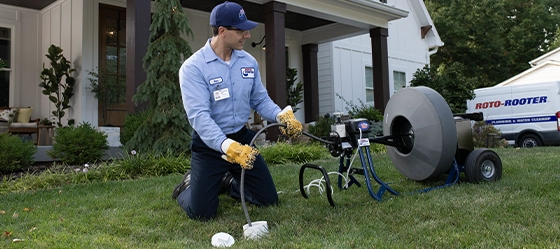
Roto-Rooter provides comprehensive sewer line repair throughout Long Beach, CA. Our experienced plumbing technicians understand the demands that pre-war pipe materials, coastal soil conditions, and dense urban development place on residential and commercial sewer systems across the city.
- Full sewer line inspection, repair, and replacement: Covering vitrified clay, cast iron, and modern PVC systems
- Trenchless repair options: Restore pipes without excavating through tight urban lots
- Video camera inspection: Pinpoint cracks, root blockages, and collapsed sections
- Root removal and preventive treatments: Clear intrusion and seal entry points
- Available 24/7, 365 days a year: Emergency sewer response when your line fails
Call Roto-Rooter at 562-424-0025 or schedule your sewer line service online.
What Damages Sewer Lines Across Long Beach
Sewer line failures in Long Beach follow patterns driven by the city's construction history, coastal environment, and dense urban landscape.
- Aging vitrified clay pipe deterioration: Vitrified clay pipes installed before 1950 make up the majority of Long Beach's residential laterals. After 75-plus years, clay becomes brittle, cracks propagate through the pipe wall, and mortared joints separate under soil pressure. These gaps become entry points for roots and corrosive groundwater.
- Coastal groundwater corrosion: Homes near the coast face accelerated pipe deterioration as saltwater-laden groundwater contacts pipe exteriors. Cast iron corrodes aggressively in these conditions, while clay tile joints absorb salt that weakens the mortar over time.
- Grease and debris accumulation: Fats, oils, and grease account for approximately 70 percent of sewage spills in Long Beach. These substances coat pipe interiors, narrowing flow capacity and trapping solid debris until complete blockages form.
- Dense tree root intrusion: Long Beach's mature urban trees - ficus, magnolia, jacaranda, and pepper trees - send aggressive root systems into aging pipe joints. Tight lot lines in the city's older neighborhoods mean tree roots regularly cross property boundaries to reach sewer laterals.
- Soil shifting and settlement: Coastal and alluvial soils beneath Long Beach shift with moisture changes and seismic activity. This movement misaligns pipe joints, creates bellied sections, and compounds damage in already-deteriorating pipes.
Long Beach Neighborhoods Where Sewer Lines Face Elevated Risk
Sewer line condition varies across Long Beach based on when neighborhoods were built, proximity to the coast, and original pipe materials.
- Belmont Shore and Naples: Coastal proximity means constant exposure to brackish groundwater. Homes dating to the 1920s and 1930s contain some of the oldest residential laterals in the city, with clay tile pipes that have endured nearly a century of salt exposure.
- Bixby Knolls and California Heights: Post-1920s development with dense tree canopy drives persistent root intrusion into aging clay pipes. The established ficus and magnolia trees along residential streets are among the most aggressive root producers in Southern California.
- Downtown and Alamitos Beach: Dense urban development with older infrastructure means tight access for repair crews and limited space for conventional excavation. Cast iron and clay pipes in these areas handle heavy usage loads relative to their age.
- North Long Beach and Houghton Park: Postwar construction installed laterals during the 1950s and 1960s that are now 60 to 70 years old. Lower elevation in parts of this area increases susceptibility to stormwater-related backups.
Serving the entire Long Beach metro area, Including:
Counties in the Long Beach Metro Area
Warning Signs Your Long Beach Sewer Line Needs Attention
With pipes averaging 75-plus years old, sewer line problems can escalate quickly in Long Beach. Watch for these indicators.
- Multiple slow drains throughout the house: When several fixtures drain slowly simultaneously, the blockage is in the main sewer lateral.
- Sewage odors in the yard or near the foundation: A cracked lateral leaks sewage into surrounding soil, producing noticeable odors.
- Wet spots or sinkholes in the yard: Leaking sewage erodes soil above the damaged pipe, creating depressions or persistently soggy areas.
- Gurgling sounds during water use: Air trapped in a partially blocked lateral escapes through fixture drains.
- Sewage backups during heavy rain: Stormwater infiltrating cracked pipes overwhelms the lateral, causing backups into the lowest fixtures.

Same-Day Sewer Line Repair in Long Beach
Call Roto-Rooter for Sewer Line Repair in Long Beach - Available 24/7

SPECIAL FINANCING AVAILABLE
We have partnered with Synchrony Bank to offer financing options to make your plumbing repair expenses as convenient and stress-free as possible.