Sewer Line Repair in Glendale, CA
Where the Verdugo Mountains Meet Century-Old Pipe Infrastructure
Glendale sits at the base and along the slopes of the Verdugo Mountains, where the geology shifts between hillside soil prone to seismic movement and valley floor alluvial deposits that settle under the weight of development. The city's oldest neighborhoods were established in the early 1900s, and many homes still rely on original clay tile and cast iron sewer laterals that have absorbed decades of ground movement, seismic activity, and aggressive root intrusion. Mature eucalyptus, pepper trees, and California sycamores line the streets throughout Sparr Heights and Verdugo Woodlands, sending roots deep into aging pipe joints searching for moisture.
Glendale's location in the seismically active Los Angeles Basin adds another dimension to sewer line stress. Even minor tectonic movement shifts ground around buried pipes, and a significant event can displace entire sections. Roto-Rooter has provided professional sewer line repair since 1935. Our experienced plumbing technicians understand the soil conditions, pipe materials, and seismic factors that affect sewer lines beneath properties here.
Call 818-739-0018 or schedule service online.
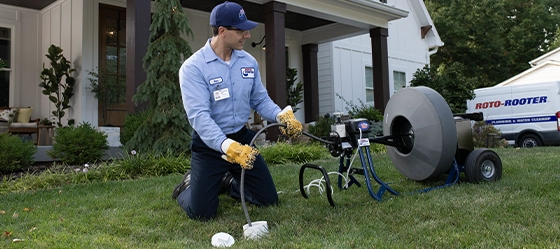
What Damages Glendale Sewer Lines
Glendale's mountainous terrain, seismic activity, and aging pipe infrastructure create sewer line failure patterns specific to this section of the Los Angeles Basin.
- Hillside soil movement: Properties on slopes near the Verdugo Mountains sit on soil that shifts with rainfall, seismic activity, and seasonal moisture changes. The gravitational pressure on sewer laterals running downhill adds stress that flat-terrain homes do not experience.
- Seismic ground displacement: Glendale sits near active faults, and even minor seismic events shift ground around buried pipes. Over time, this movement separates joints, cracks rigid pipe materials, and displaces pipe sections.
- Clay tile and cast iron deterioration: Homes built before the 1960s throughout Sparr Heights, Verdugo Woodlands, and Rossmoyne have original clay tile or cast iron sewer laterals. After 60 to 100 years, clay joints fail and cast iron corrodes through.
- Aggressive tree root invasion: Eucalyptus, pepper trees, and California sycamores produce persistent root systems that penetrate clay pipe joints and hairline cracks. These species are common throughout Glendale's established neighborhoods and drive the most frequent sewer line blockages.
- Hard water mineral buildup: Glendale Water and Power delivers moderately hard water that deposits calcium scale inside drain and sewer pipes. This narrows pipe diameter and creates rough surfaces where debris accumulates.
- Rain event surcharging: When winter storms deliver significant rainfall after dry months, the sudden ground saturation forces water through cracked joints and can overwhelm pipe capacity, causing backups.
Frequently Asked Questions
How does hillside terrain affect sewer lines?
Sewer laterals on slopes experience gravitational stress that flat-terrain pipes do not. The weight of uphill soil presses on the pipe, and runoff during rain events erodes support beneath hillside sections. Over time, this creates joint separation and bellied sections. Call ${phone} for a camera inspection.
Does earthquake activity damage sewer lines?
Yes. Even minor seismic events shift ground around buried pipes. Significant earthquakes can displace pipe sections entirely, severing connections. Properties near active faults face elevated risk. A camera inspection after a notable seismic event identifies damage before it causes a backup.
Can trenchless repair work on hillside properties?
Trenchless methods are ideal for hillside properties because they access the pipe through small entry points without trenching across steep terrain, retaining walls, or established hillside landscaping. Pipe lining and pipe bursting both perform effectively on slopes.
What pipe materials are in Glendale homes?
Pre-1960s homes typically have clay tile or cast iron sewer laterals. Mid-century construction may include a mix of cast iron and early PVC. Newer homes have PVC connections. A camera inspection identifies your specific pipe material and its current condition.
How long does sewer line repair take?
Trenchless lining and spot repairs typically complete in one day. Full line replacements on hillside properties may take two to three days depending on terrain, pipe depth, and access conditions.
Do eucalyptus tree roots really damage sewer pipes?
Eucalyptus trees produce aggressive root systems that travel long distances seeking moisture. They penetrate clay pipe joints and hairline cracks, then expand inside the pipe with enough force to crack the wall. Properties with eucalyptus trees near the sewer line path should have regular camera inspections to catch root intrusion early.
Does Roto-Rooter handle commercial sewer repair in Glendale?
Roto-Rooter provides commercial sewer line inspection and repair for restaurants, retail centers, office buildings, and multi-unit residential properties across Glendale. Our commercial equipment handles lines up to 10 inches in diameter.
Serving the entire Los Angeles metro area, Including:
Counties in the Glendale Area
Glendale Neighborhoods and Sewer Conditions
Glendale's varied terrain and construction history create different underground challenges across the city.
- Sparr Heights and Verdugo Woodlands: Hillside and foothill neighborhoods with homes dating to the early and mid-1900s. Steep lot grades put gravitational and soil pressure on sewer laterals running downhill. Mature eucalyptus and sycamore trees along residential streets drive aggressive root intrusion into clay tile pipe joints.
- Rossmoyne and La Crescenta border: Established residential areas with original clay tile and cast iron sewer connections. The hilly terrain and proximity to mountain drainage channels create variable soil moisture conditions that stress pipe connections.
- Downtown Glendale and Brand Boulevard corridor: Dense commercial and residential development with mixed-era pipe infrastructure. Older sections have century-old sewer connections while newer development has modern PVC.
- Tropico and South Glendale: Valley floor neighborhoods with mid-century homes. The flatter terrain provides more stable ground conditions than hillside areas, but aging cast iron pipes and mature trees still create sewer line failures.
- Montrose and Upper Verdugo: Foothill properties with challenging terrain for pipe access. Steep grades, retaining walls, and mature landscaping make trenchless repair methods especially valuable in these neighborhoods.

Same-Day Sewer Line Repair in Glendale
Glendale's Trusted Sewer Line Repair Team

SPECIAL FINANCING AVAILABLE
We have partnered with Synchrony Bank to offer financing options to make your plumbing repair expenses as convenient and stress-free as possible.