Water Heater Installation in Anaheim, CA
Southern California's Hardest Water Puts Anaheim Water Heaters to the Test
Anaheim's water measures approximately 300 parts per million hardness - about 18 grains per gallon - placing it firmly in the "very hard" category. That mineral load deposits calcium and magnesium scale on tank interiors, heating elements, and inside tankless heat exchangers at an aggressive rate. The City of Anaheim reports that periodic inspection and maintenance of water heaters is especially important in areas with high mineral content like this, where sediment can harden on tank bottoms, reduce efficiency, and eventually clog drain valves.
Anaheim's mild Southern California climate means incoming water temperatures stay in the 60s for most of the year, which helps water heaters recover faster than in colder regions. But the hard water disadvantage outweighs that benefit if the installation does not account for scale management. A water heater rated for 10 to 12 years of service may fail in 6 to 8 years without proper maintenance in Anaheim's water conditions.
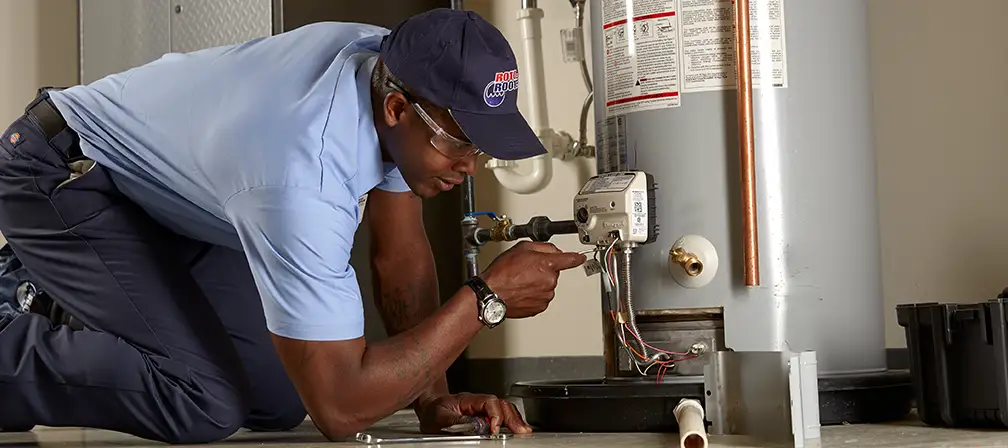
Roto-Rooter has been a trusted plumbing company since 1935. Our Anaheim technicians factor in local water hardness when recommending equipment, sizing units, and advising on maintenance schedules.
Available 24/7, 365 days a year for emergency water heater replacement and installation.
Roto-Rooter is fully insured with experienced plumbing technicians.
Free estimates provided before any installation work begins. No extra charge for nights and weekends.
Full assessment of existing plumbing, gas lines, and water heater condition before installation.
Call Roto-Rooter at 657-231-4190 or schedule service online to discuss water heater installation for your Anaheim home.
Anaheim's Neighborhoods and What They Mean for Your Installation
Anaheim spans more than 160 years of development. The original 1857 German colony settlement anchors the city's historic core, while master-planned communities surround the Platinum Triangle. The plumbing systems behind those walls include pre-war galvanized steel, mid-century copper, and modern PEX, each presenting distinct installation considerations.
The Anaheim Colony Historic District - the city's first and largest historic district, designated in 1997 - contains homes dating to the late 1800s and early 1900s with original plumbing that has carried very hard water for over a century. Galvanized supply lines in these homes are often severely restricted by mineral deposits, and gas piping may need upgrading to support modern water heater BTU requirements.
Colony West and the Five Points Historic District feature homes built primarily between the 1940s and 1960s, with copper supply piping that shows interior corrosion after decades of hard water exposure. The Hoskins Historic District showcases postwar ranch-style homes where original water heater setups were sized for smaller households.
Anaheim Hills and newer communities near Angel Stadium feature copper and PEX plumbing with properly sized gas lines that accommodate high-efficiency and tankless installations without significant modifications.
Roto-Rooter technicians evaluate these neighborhood-specific conditions before recommending a water heater model for your Anaheim home.
Serving the entire Anaheim metro area, Including:
Counties in the Anaheim Area
Warning Signs Your Anaheim Water Heater Needs Replacement
- White particles clogging fixtures: Bits of calcium carbonate scale breaking free from the water heater interior and flowing into faucets and showerheads - a common issue in Anaheim's hard water conditions.
- Rusty or discolored hot water: Brown or rust-colored water from hot taps indicates interior tank corrosion. Once the tank lining fails, replacement is the only reliable fix.
- Rumbling or popping sounds: Hardened sediment on the tank bottom traps water underneath, creating steam pops when the burner fires. Anaheim's very hard water accelerates sediment formation significantly.
- Water pooling around the base: Any moisture near the water heater suggests a tank leak or failing connections. Even small leaks can damage garage flooring, drywall, and stored belongings.
- Inconsistent hot water temperature: Fluctuating temperatures signal a failing thermostat, scaled heating element, or a tank that can no longer meet demand.
- Age beyond 8 years: Tank water heaters in Anaheim's very hard water often reach end of life earlier than the 10 to 12 year average in softer water areas. Proactive replacement prevents emergency failures.
- Rising energy bills: A gradual increase in gas or electric costs without changes in usage indicates a water heater losing efficiency to scale buildup.

Same-Day Water Heater Installation in Anaheim
Call Roto-Rooter for Water Heater Installation in Anaheim

Frequently Asked Questions
How does Anaheim's hard water affect my water heater?
Anaheim's water measures approximately 18 grains per gallon - classified as very hard. Calcium and magnesium minerals deposit as scale on tank walls, heating elements, and inside tankless heat exchangers. Without regular maintenance, this scale reduces heating efficiency by 20% to 30% and can shorten a water heater's lifespan by several years. Annual flushing for tank units and descaling for tankless units is essential in Anaheim.
Should I choose a tank or tankless water heater in Anaheim?
Both types work well in Anaheim's climate when maintained properly for hard water conditions. Tank units offer lower upfront costs and can be flushed easily to remove sediment. Tankless units save energy and space but need more frequent descaling in Anaheim's very hard water - at least once per year. Roto-Rooter provides free estimates for both options.
How long does a water heater installation take in Anaheim?
A standard tank replacement typically takes two to four hours, including earthquake strapping. Tankless installations require four to eight hours when converting a tank setup, due to gas line upgrades, new venting runs, and potential electrical work.
Should I install a water softener with my new water heater in Anaheim?
A water softener is strongly recommended in Anaheim given the 18 grains per gallon hardness level. Softening the water before it reaches your water heater dramatically reduces scale formation, extends equipment life, and maintains heating efficiency. The City of Anaheim confirms that homeowners who prefer less mineral content in their water can install a water softening system.
Do I need a permit for water heater installation in Anaheim?
Anaheim's building department requires permits for water heater installations involving gas line modifications, electrical changes, or new venting systems. Roto-Rooter handles all permit applications and coordinates required inspections as part of the installation.
How often should I maintain my water heater in Anaheim?
In Anaheim's very hard water, maintenance should happen at least annually. Tank units need flushing to remove sediment, plus an anode rod inspection every two years. Tankless units need descaling once or twice per year depending on usage and whether a water softener is installed. Call 657-231-4190 to schedule maintenance.
Does Anaheim require earthquake strapping for water heaters?
Yes. California law requires all water heaters to be secured with approved seismic straps. Roto-Rooter includes compliant earthquake strapping with every installation in Anaheim. This includes strapping at the upper and lower third of the unit, secured to wall studs or a structural brace.
SPECIAL FINANCING AVAILABLE
We have partnered with Synchrony Bank to offer financing options to make your plumbing repair expenses as convenient and stress-free as possible.